
What Military Branches Are Front Line Soldiers
Not every soldier charges into battle, but some do, and understanding which military branches put troops on the front lines matters, whether you’re considering enlistment, studying military structure, or simply curious about how modern armed forces operate. Here’s a clear breakdown of which branches produce combat soldiers and what that actually means.
🎯 What Does “Front Line Soldier” Actually Mean?
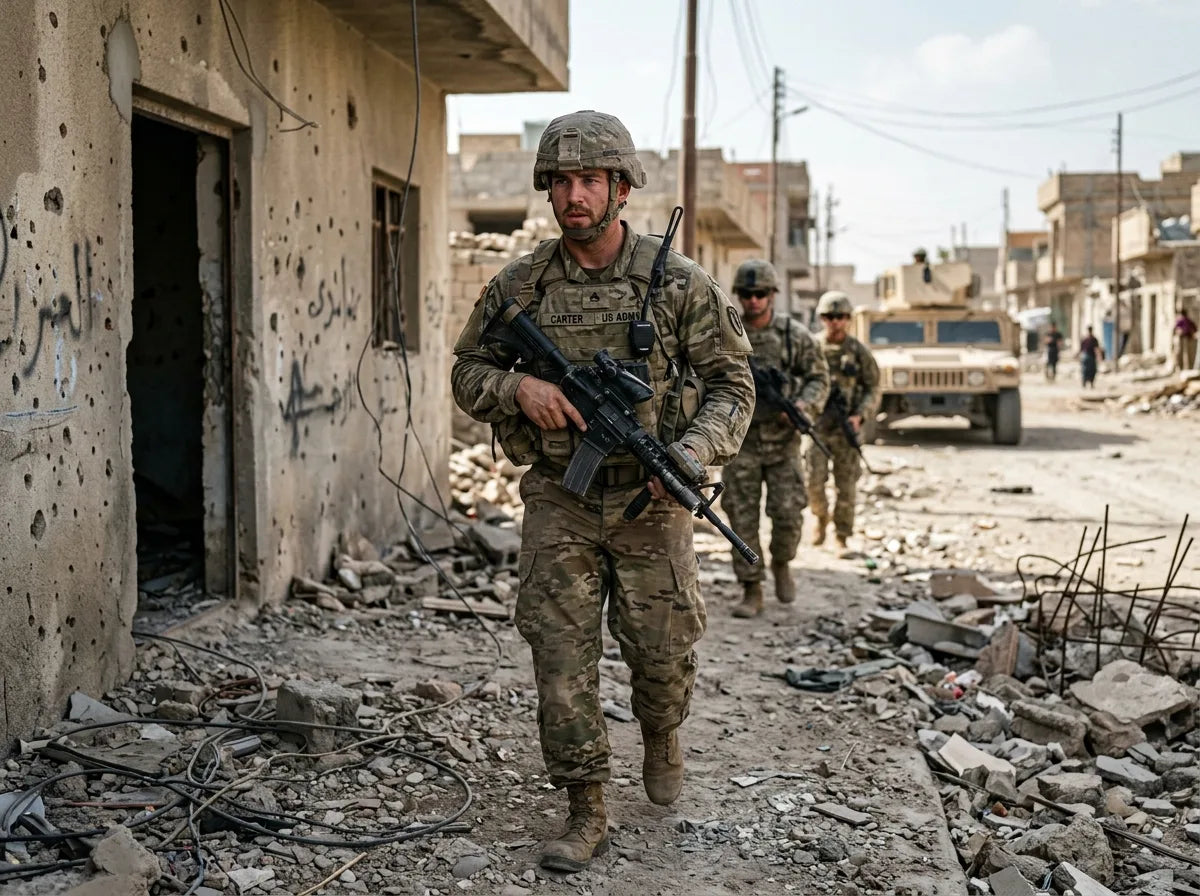
The term front line soldier refers to military personnel who engage directly with enemy forces in combat. These are the troops operating in close proximity to hostile threats, whether in urban warfare, jungle terrain, desert operations, or mountainous regions. They are also called combat arms or ground combat forces in official military terminology.
Not every service member carries a rifle into direct fire. In fact, the majority of military personnel serve in support roles, logistics, intelligence, and administration. The front line represents a specific, highly trained subset of the armed forces.
Understanding this distinction helps clarify which branches actually produce and deploy front line fighters versus those that primarily support combat operations from a distance.
⚔️ The Army: The Largest Producer of Front Line Soldiers
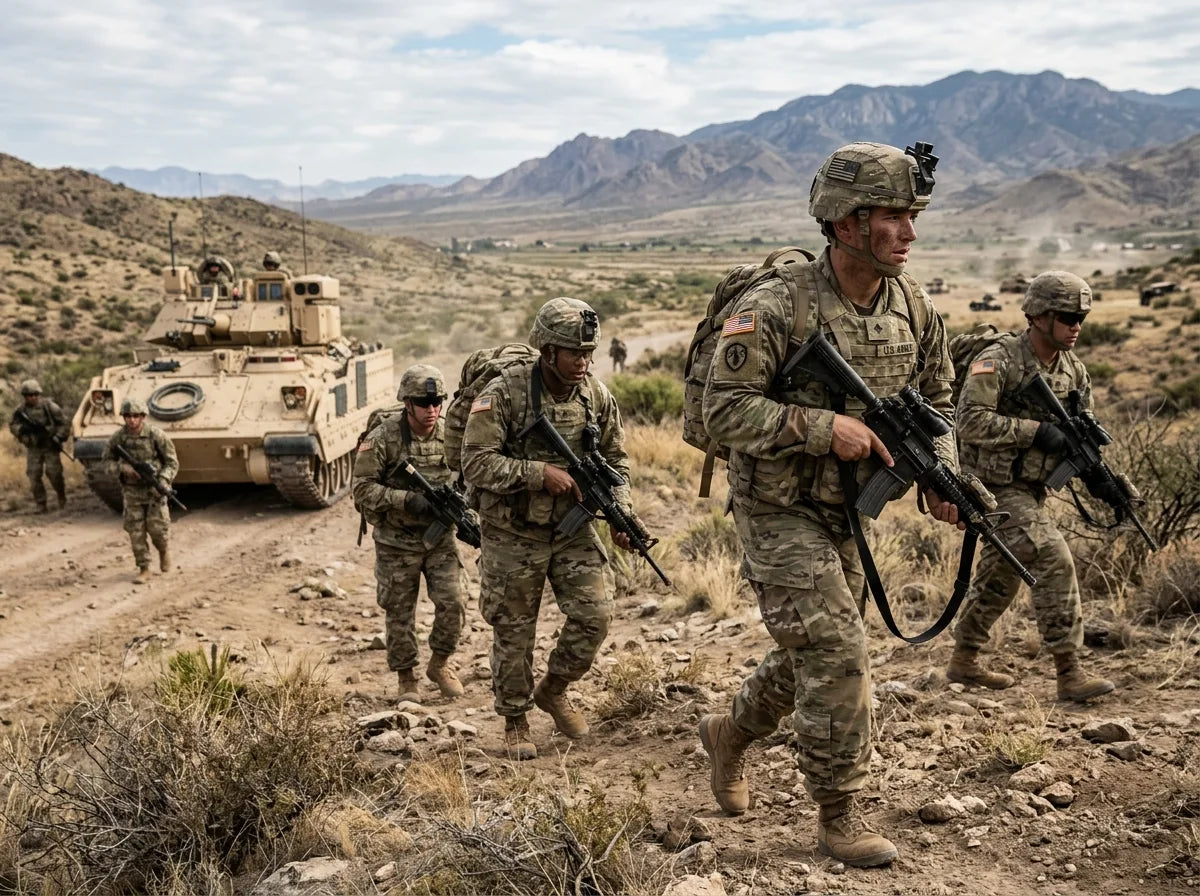
The United States Army is the primary branch responsible for ground combat operations. It fields the largest number of front line soldiers of any branch and has the broadest range of combat arms roles available to enlisted personnel and officers.
Key Army Combat Arms Roles
- Infantry – The core front line role, engaging enemies directly on foot
- Armor – Tank crews and armored vehicle operators in direct combat
- Special Forces (Green Berets) – Elite unconventional warfare specialists
- Rangers – Rapid deployment light infantry for direct action missions
- Combat Engineers – Breaching obstacles and operating in forward positions
- Field Artillery – Direct and indirect fire support in combat zones
The Army’s Infantry branch is arguably the most recognized front line role in military history. Infantrymen, often called “11 Bravo” after their Military Occupational Specialty (MOS) code, are trained specifically for direct ground combat. They operate in all environments and conditions.
The Army also houses Ranger battalions under the 75th Ranger Regiment, considered among the most elite light infantry units in the world. These soldiers operate in high-risk, direct action environments with minimal support infrastructure.
🌊 The Marine Corps: Built for Expeditionary Combat
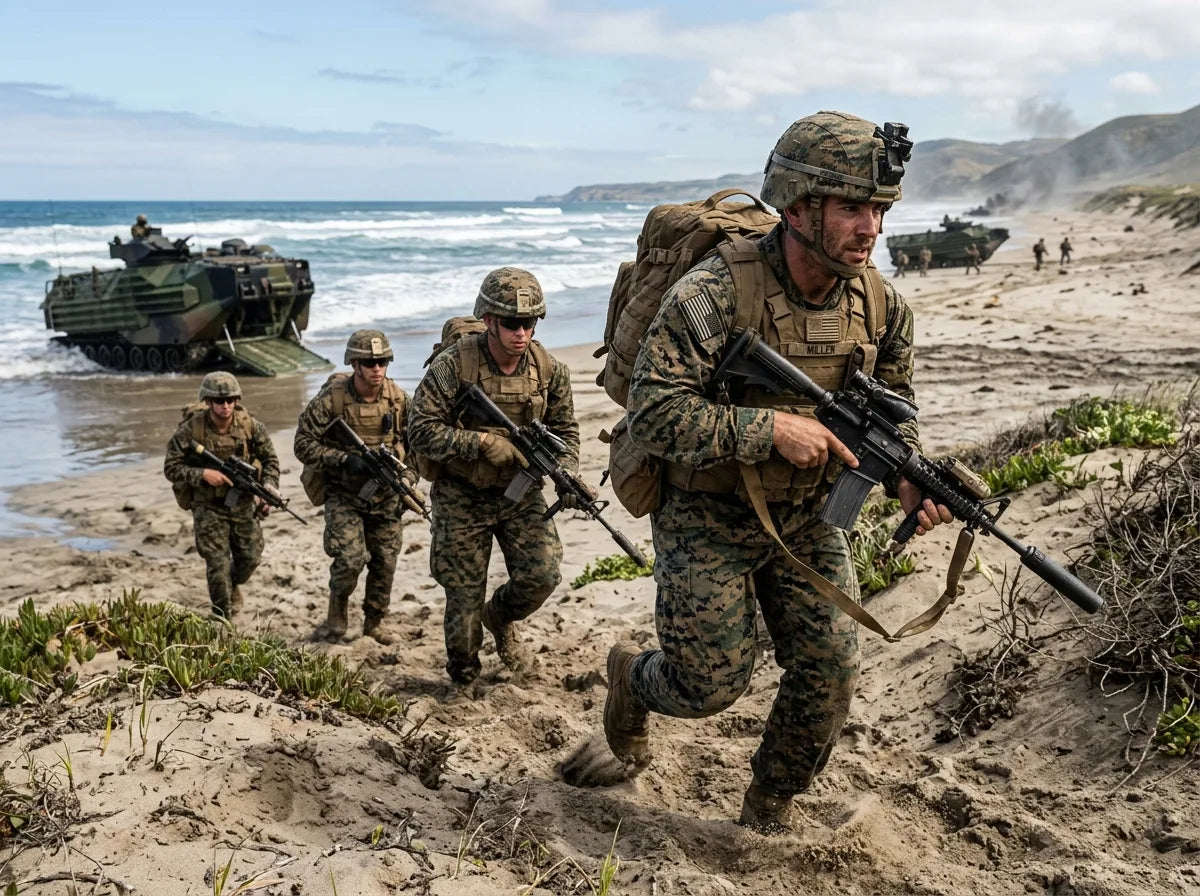
The United States Marine Corps is specifically designed for rapid deployment into hostile territory. Marines are trained as a combined arms fighting force, meaning every Marine, regardless of specialty, receives basic combat training before moving into their assigned role.
The Marine Corps motto “Every Marine a Rifleman” reflects this philosophy. Even logistics and administrative Marines receive infantry-level weapons training. However, the true front line fighters within the Corps fall under specific combat occupational fields.
Marine Corps Front Line Specialties
- 0311 Rifleman – The Marine equivalent of Army Infantry
- 0321 Reconnaissance Marine – Scout and direct action specialist
- 0372 Critical Skills Operator (Raiders) – Marine Special Operations Command
- 1812 Tank Crewman – Armored combat operations
- 0331 Machine Gunner – Crew-served weapons in forward positions
The Marine Corps is often the first branch deployed in conflict situations due to its expeditionary nature. Marine Expeditionary Units (MEUs) are kept on constant readiness, capable of reaching a hostile shore within hours of an order. This makes Marines some of the most consistently deployed front line forces in the U.S. military.
🪂 Special Operations Forces Across Multiple Branches
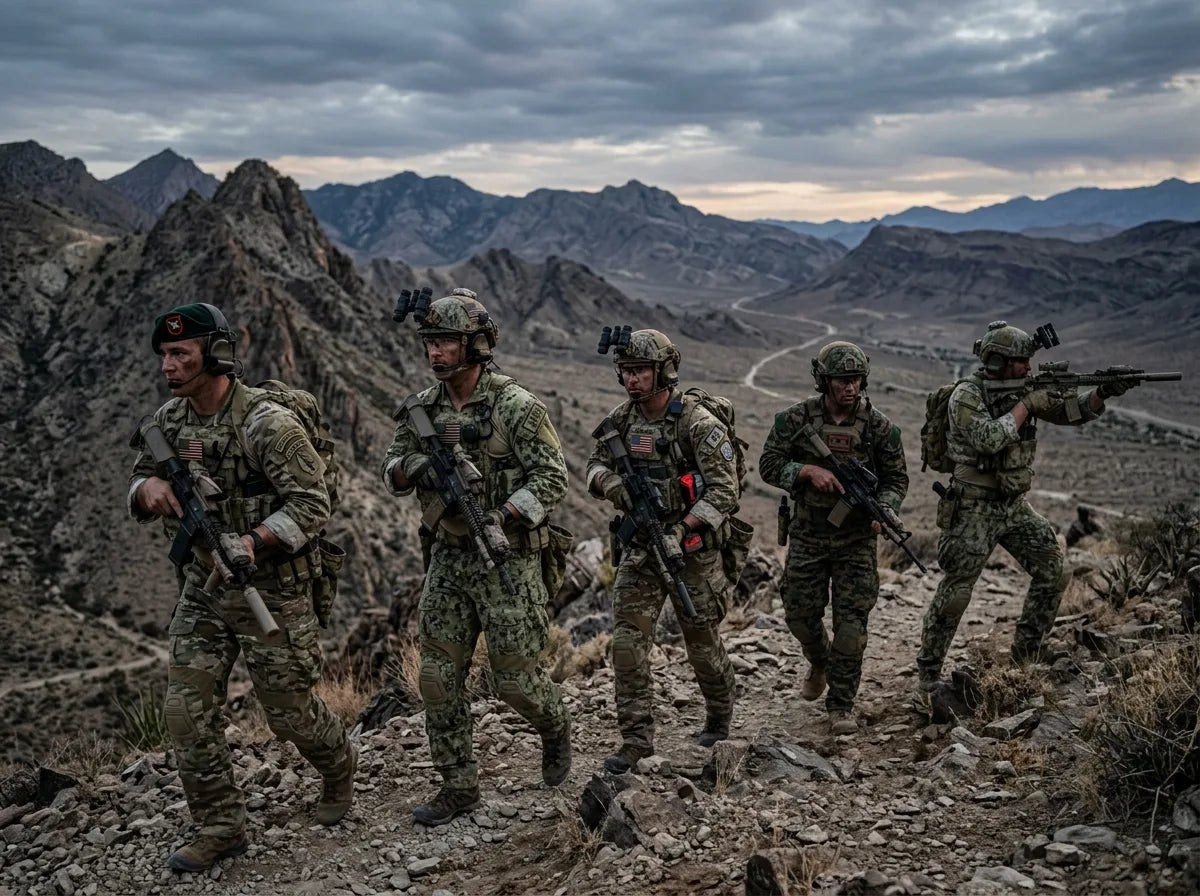
Special Operations Forces (SOF) represent the most elite tier of front line soldiers. These units exist across multiple branches and are trained for missions beyond conventional infantry operations, including counterterrorism, hostage rescue, and deep reconnaissance.
Recognition of military service and sacrifice is deeply tied to these front line roles. If you’re interested in understanding how combat service is honored, learning about what are the top 10 military medals provides important context on how front line service is recognized across branches.
| ⚔️ SOF Unit | Branch | Primary Mission |
|---|---|---|
| Army Rangers | Army | Direct action, airfield seizure |
| Green Berets | Army | Unconventional warfare, foreign internal defense |
| Navy SEALs | Navy | Maritime, counterterrorism, reconnaissance |
| Marine Raiders | Marine Corps | Special reconnaissance, direct action |
| Air Force PJs | Air Force | Combat search and rescue, personnel recovery |
| Delta Force (CAG) | Army (classified) | Tier 1 counterterrorism, hostage rescue |
Navy SEALs are among the most well-known special operations forces globally. Despite being a Navy asset, SEALs frequently operate deep inland, far from any maritime environment. Their training pipeline, known as BUD/S (Basic Underwater Demolition/SEAL), has one of the highest attrition rates in military training worldwide.
The Air Force Pararescuemen (PJs) deserve specific mention because they are often overlooked as front line soldiers. PJs operate in direct fire environments to recover downed pilots and personnel, making them genuine combat operators despite belonging to the Air Force.
✈️ The Air Force and Navy: Combat Roles Beyond the Ground
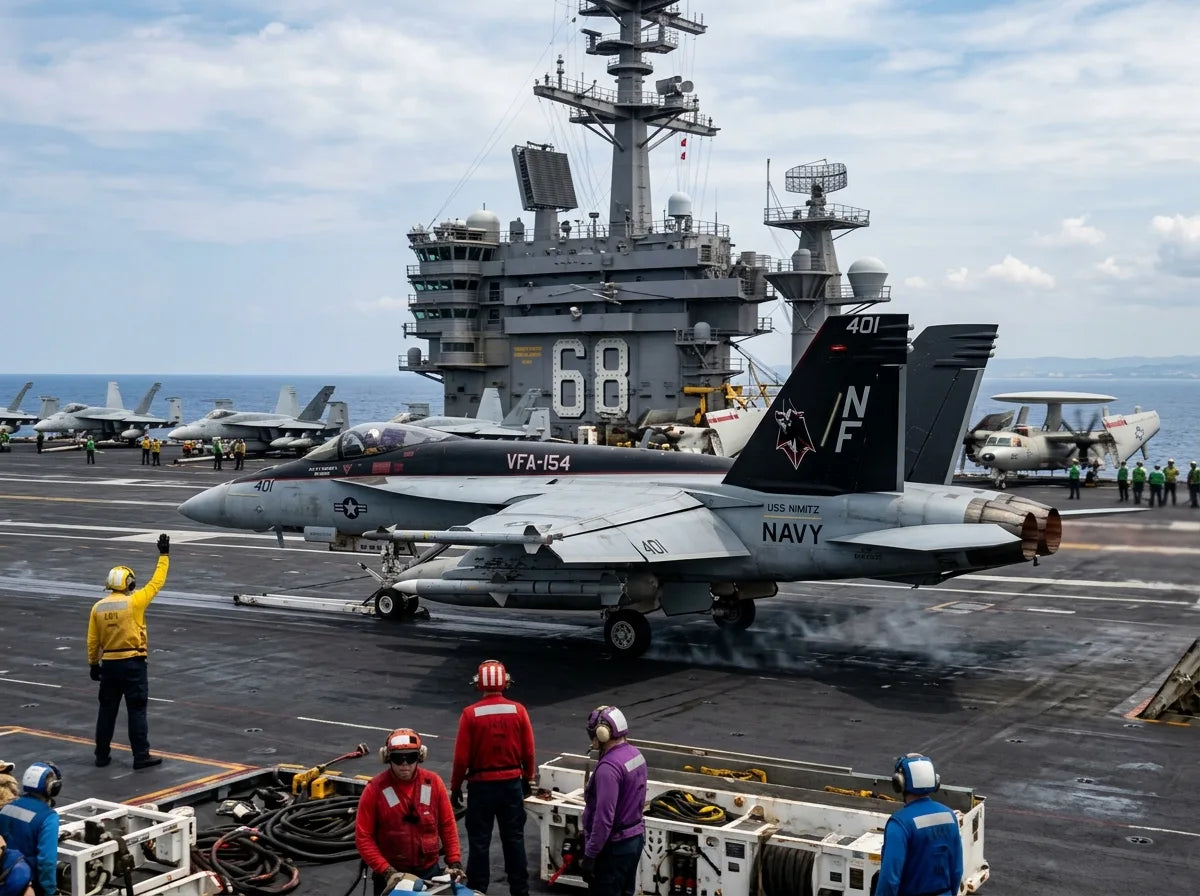
The Air Force and Navy are not traditionally associated with front line infantry, but both branches have combat personnel who operate in direct threat environments.
Air Force Combat Roles
Beyond Pararescuemen, the Air Force fields Combat Controllers (CCTs) who embed with Army and Marine units to direct air strikes from the ground. These operators parachute into hostile territory and call in close air support during active engagements. They are classified as Special Operations Forces and carry full combat loads.
Tactical Air Control Party (TACP) specialists serve a similar function, operating alongside ground forces to coordinate air power. These airmen frequently deploy with Army infantry units and are exposed to the same front line risks.
Navy Combat Roles
Outside of SEALs, the Navy’s front line presence is primarily airborne. Naval aviators flying strike missions over contested airspace face direct threat environments. The Navy also operates Explosive Ordnance Disposal (EOD) teams that work alongside ground forces in active combat zones, disabling improvised explosive devices and other threats.
🔍 How Front Line Roles Are Classified Across Branches
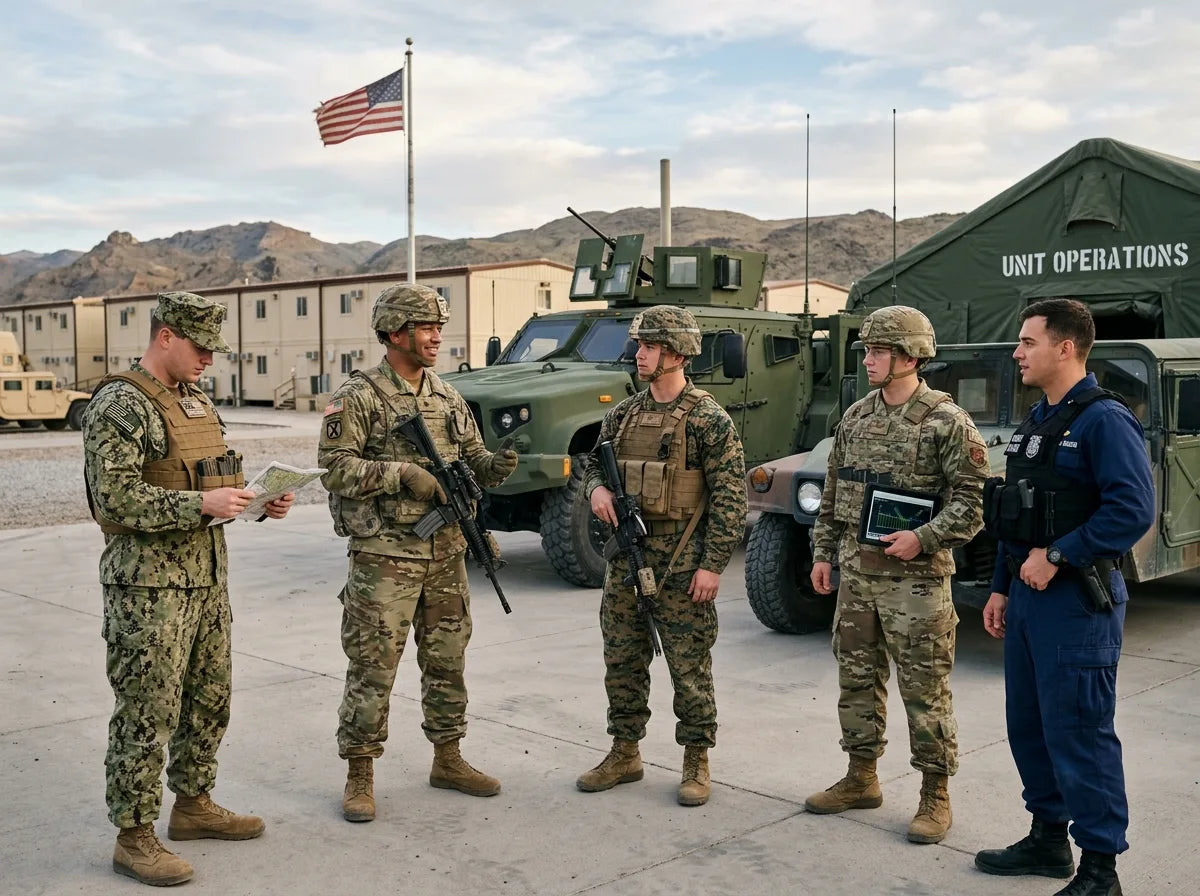
The U.S. military uses specific terminology to classify combat roles. Understanding these classifications helps clarify which personnel qualify as front line soldiers versus combat support or combat service support.
- Combat Arms – Directly engages the enemy (Infantry, Armor, Special Forces)
- Combat Support – Provides direct support during combat operations (Engineers, Military Police)
- Combat Service Support – Logistics, medical, and administrative support behind the lines
- Special Operations Forces – Cross-branch elite units operating in direct action environments
- Close Combat Forces – A newer DoD classification covering Infantry, Armor, and SOF
It’s worth noting that women in the military were officially authorized to serve in all combat roles, including front line infantry, following a policy change that removed the final restrictions on combat assignments. This means all branches now have women eligible for front line positions, including Infantry and Special Operations selection pipelines.
The historical structure of how military forces were organized and deployed has evolved significantly over time. For broader context on military organization and history, understanding what the military districts were during Reconstruction shows how dramatically the role and deployment of military forces has shifted across American history.
🎖️ Which Branch Has the Most Front Line Combat Soldiers?
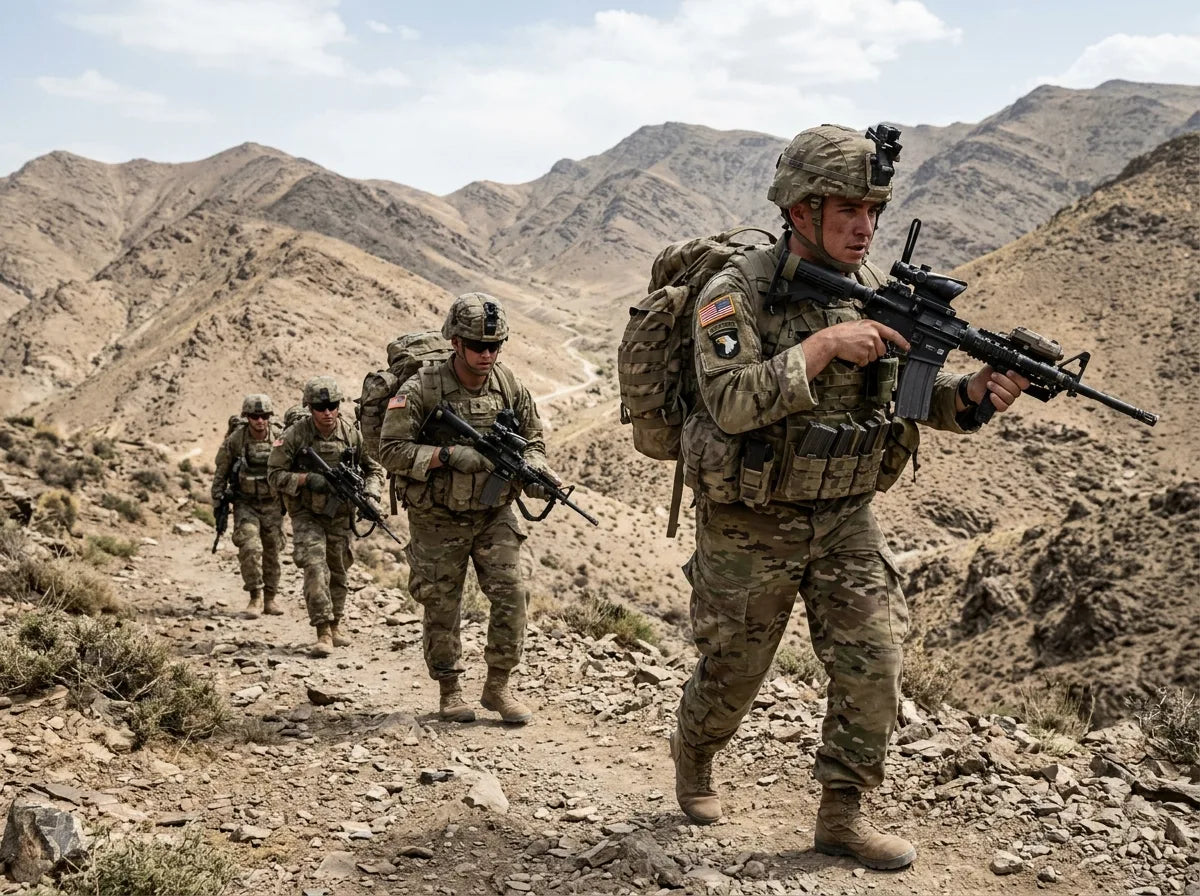
By raw numbers, the Army fields the most front line soldiers of any branch. With over 450,000 active duty personnel and a significant percentage in combat arms roles, the Army’s infantry and armor formations represent the largest ground combat force in the U.S. military.
The Marine Corps has a higher percentage of combat arms personnel relative to its total size. Marines are structured with combat as the primary mission, so the ratio of fighters to support personnel leans more heavily toward combat than in the Army.
Special Operations Command (SOCOM) consolidates elite front line operators from all branches under a unified command, representing the smallest but most capable tier of direct action forces across the entire military.
If the question is purely about which branch produces the most combat infantry, the Army wins by volume. If the question is about which branch has combat as its core identity and highest combat-to-support ratio, the Marine Corps makes a strong case. And if the question is about the most specialized and capable front line operators, Special Operations Forces across all branches represent the answer.
Final Thoughts
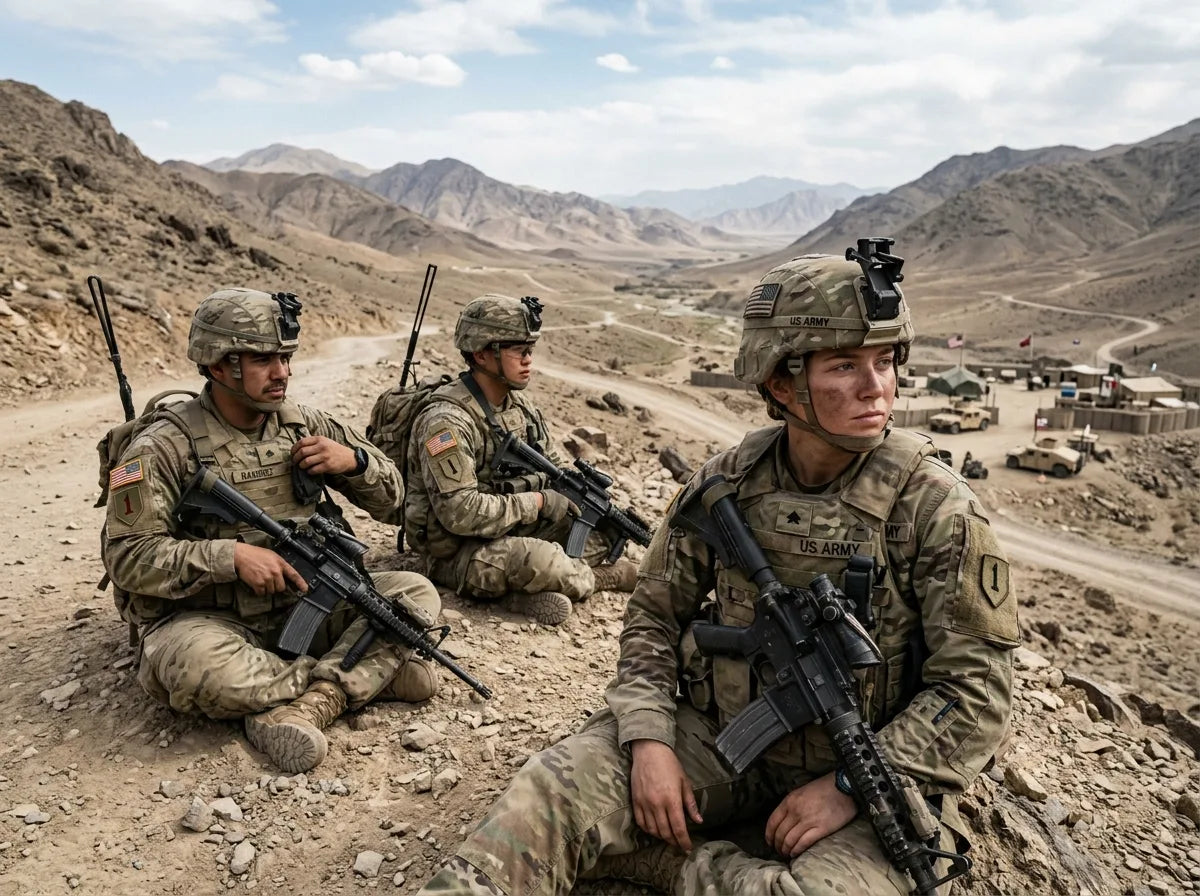
Front line soldiers come primarily from the Army and Marine Corps, with significant combat roles also existing within Special Operations units across the Navy, Air Force, and Army. The Army produces the most combat troops by volume, while the Marine Corps maintains the highest combat-focused identity. Special Operations Forces from all branches represent the elite tier of direct action operators. Understanding these distinctions matters whether you’re evaluating military service options, studying defense policy, or simply building a clearer picture of how modern armed forces are structured and deployed into harm’s way.