
How to Enlist in the Military
Joining the military is one of the most significant decisions you’ll ever make. Whether you’re drawn by patriotism, career opportunities, education benefits, or the challenge of service, the enlistment process has clear steps. Here’s exactly what to expect, from your first conversation with a recruiter to your first day at basic training.
🎯 Understanding Military Enlistment Basics
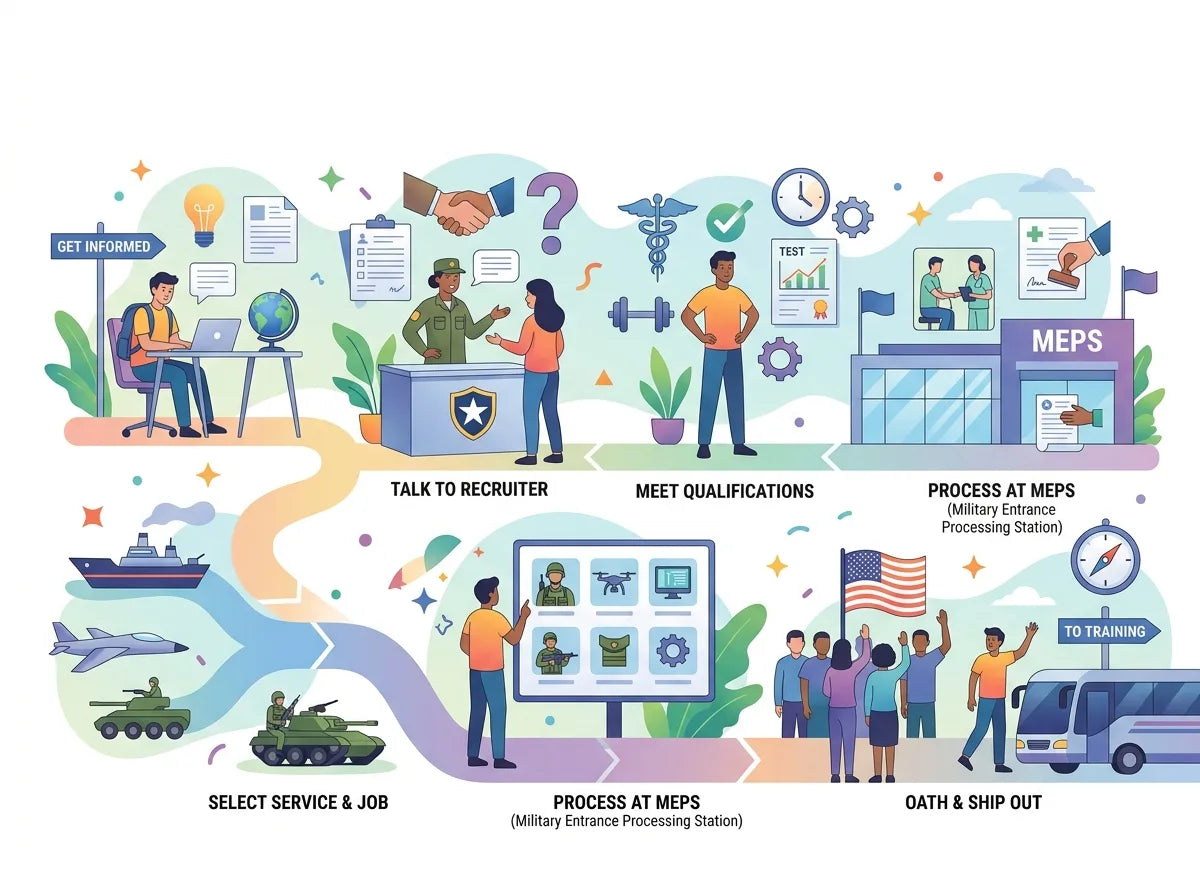
Enlisting in the military means signing a contract to serve as an enlisted member, as opposed to becoming a commissioned officer. Enlisted personnel make up roughly 83% of the U.S. military, handling everything from combat operations to technical support, logistics, and healthcare.
There are six branches you can enlist in: the Army, Navy, Marine Corps, Air Force, Space Force, and Coast Guard. Each has its own culture, mission, and job opportunities. Choosing the right branch depends on your personal goals, physical fitness, and the type of work you want to do during your service.
Before diving into the process, understand that enlistment is a legal commitment. Standard active-duty contracts run four to six years, though some specialties require longer commitments. Reserve and National Guard options offer shorter active-duty obligations with part-time service requirements.
✅ Basic Eligibility Requirements for Military Service

Every branch shares a core set of requirements. Meeting these is your first checkpoint before anything else moves forward.
Age and Citizenship
You must be between 17 and 42 years old to enlist, though the maximum age varies by branch. The Army accepts applicants up to age 35, the Navy up to 41, and the Coast Guard up to 40. At 17, you’ll need a parent or guardian’s written consent. You must also be a U.S. citizen or a lawful permanent resident.
Education
A high school diploma is the standard requirement. GED holders can still enlist, but they typically need higher ASVAB scores to qualify and may face more limited job options. Some branches have strict caps on how many GED holders they accept per year, so a diploma gives you a clear advantage.
Physical and Medical Standards
You’ll need to meet height and weight standards and pass a physical examination at a Military Entrance Processing Station (MEPS). Pre-existing medical conditions can be disqualifying, though waivers are sometimes granted depending on the condition and the branch’s current needs.
- Vision, hearing, and cardiovascular health are all evaluated
- Past surgeries, mental health history, and chronic conditions are reviewed
- Drug and alcohol history is part of the medical screening
- Physical fitness tests vary by branch but are conducted during or after MEPS
- Tattoo policies differ by branch, particularly regarding placement and content
Background and Character
A criminal background check is standard. Certain felony convictions are automatically disqualifying, while some misdemeanor offenses may require a moral waiver. Drug use history, financial issues, and prior discharge from military service are all factors that recruiters and the military review carefully.
📋 The Step-by-Step Enlistment Process
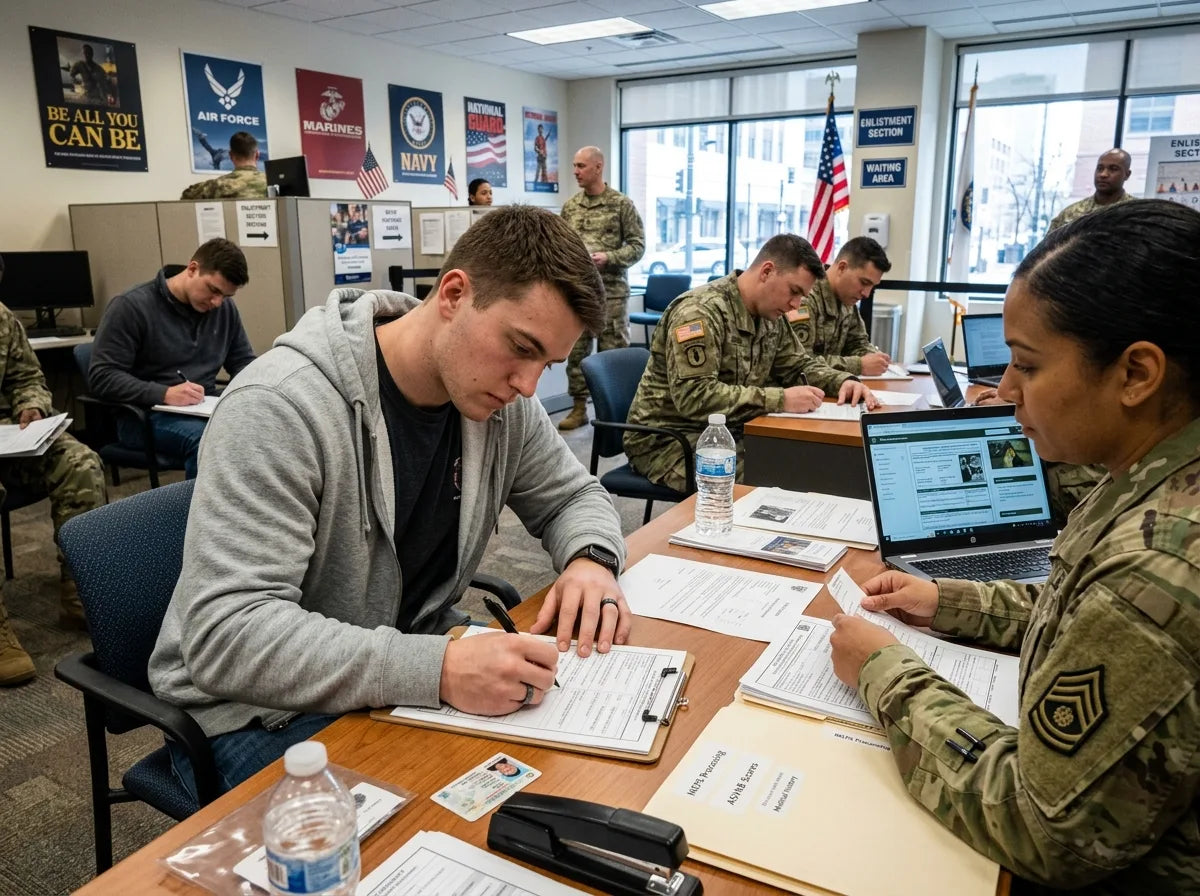
Once you know you’re eligible, the path to enlistment follows a fairly consistent sequence across all branches.
Step 1 – Contact a Recruiter
Your first step is meeting with a recruiter from your chosen branch. Recruiters are there to guide you through the process, answer questions about jobs and benefits, and help you prepare for the next stages. Be honest with your recruiter about your background, medical history, and goals. Hiding information rarely works and can result in discharge later.
Step 2 – Take the ASVAB
The Armed Services Vocational Aptitude Battery (ASVAB) is a multi-part test that measures your strengths in areas like math, science, reading, and mechanical knowledge. Your scores determine which military occupational specialties (MOS) or ratings you qualify for. Higher scores open more job options. You can take a practice ASVAB to gauge where you stand before the official test.
Step 3 – Visit MEPS
The Military Entrance Processing Station is where your physical examination, background screening, and job selection happen. MEPS visits typically take one to two days. You’ll undergo medical testing, meet with a career counselor to discuss job options based on your ASVAB scores, and, if everything checks out, take the Oath of Enlistment.
Step 4 – Choose Your Job and Sign Your Contract
At MEPS, you’ll select your Military Occupational Specialty (MOS for Army), rating (Navy), or AFSC (Air Force). Your choices depend on your ASVAB scores, physical qualifications, and available openings. Your enlistment contract locks in your job, enlistment bonus if applicable, and service length. Read it carefully before signing.
Step 5 – Ship to Basic Training
After signing, you’ll either ship out immediately or enter the Delayed Entry Program (DEP), which lets you enlist now and report for basic training at a future date, sometimes months later. Basic training duration varies: Army BCT runs about 10 weeks, Marine Corps boot camp is 13 weeks, and other branches fall within a similar range.
💰 Military Pay, Benefits, and Enlistment Bonuses
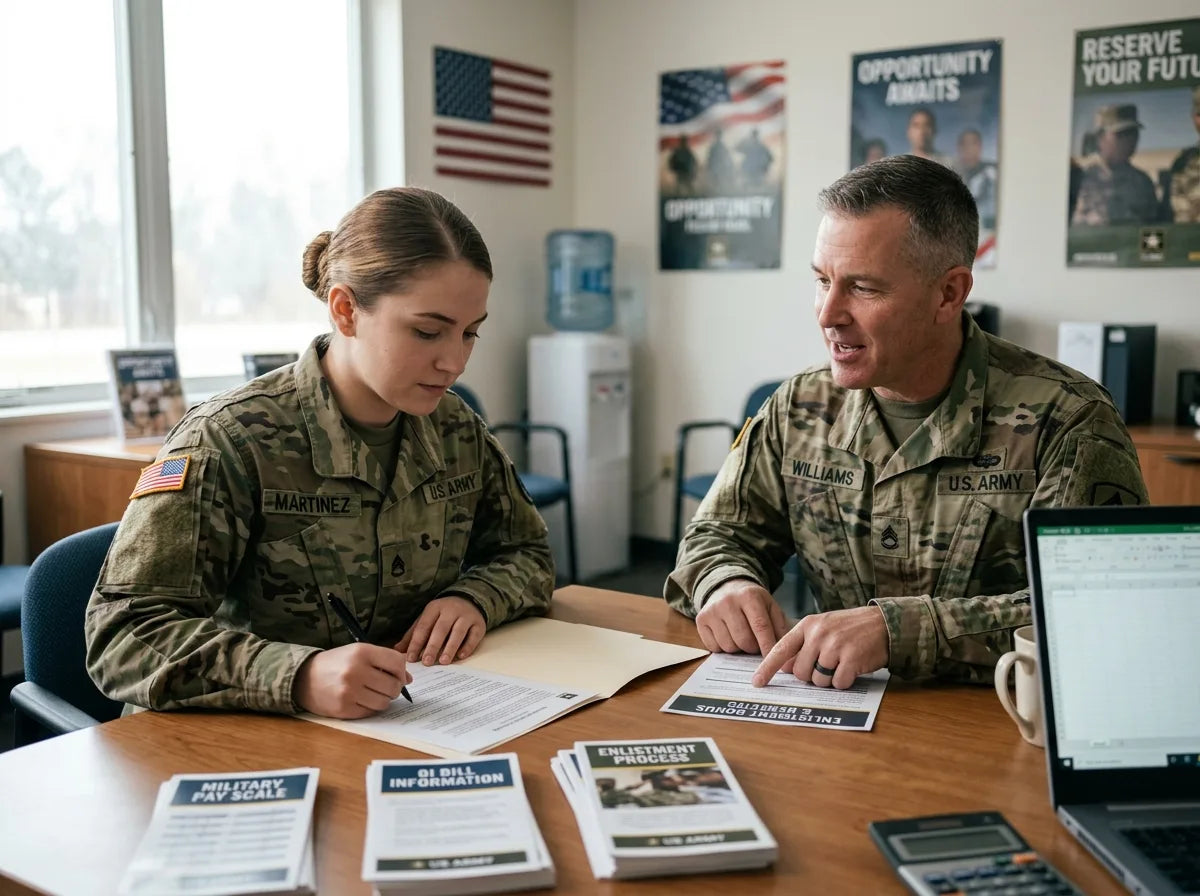
Compensation is a major factor for most recruits. Understanding what you’ll actually earn helps set realistic expectations.
| Benefit | Details |
|---|---|
| Base Pay (E-1) | 💰 Approximately $1,900-$2,100/month |
| Housing Allowance (BAH) | 🏠 Varies by location and dependency status |
| Enlistment Bonus | 💵 $2,000 to $50,000+ depending on job and branch |
| GI Bill Education | 🎓 Up to full college tuition after qualifying service |
| Healthcare | 🏥 Full medical and dental coverage through TRICARE |
Beyond base pay, the military provides food allowances (BAS), free housing on base, and access to commissaries and exchanges where goods are sold at reduced prices. The total value of military compensation often exceeds what the base salary suggests when all benefits are factored in.
If you’re considering a specialized or technical career path, it’s also worth exploring officer routes. For example, if aviation interests you, learning how to become a military pilot involves a different track than standard enlistment, typically requiring a college degree and officer commissioning.
⚠️ Common Mistakes to Avoid During the Enlistment Process
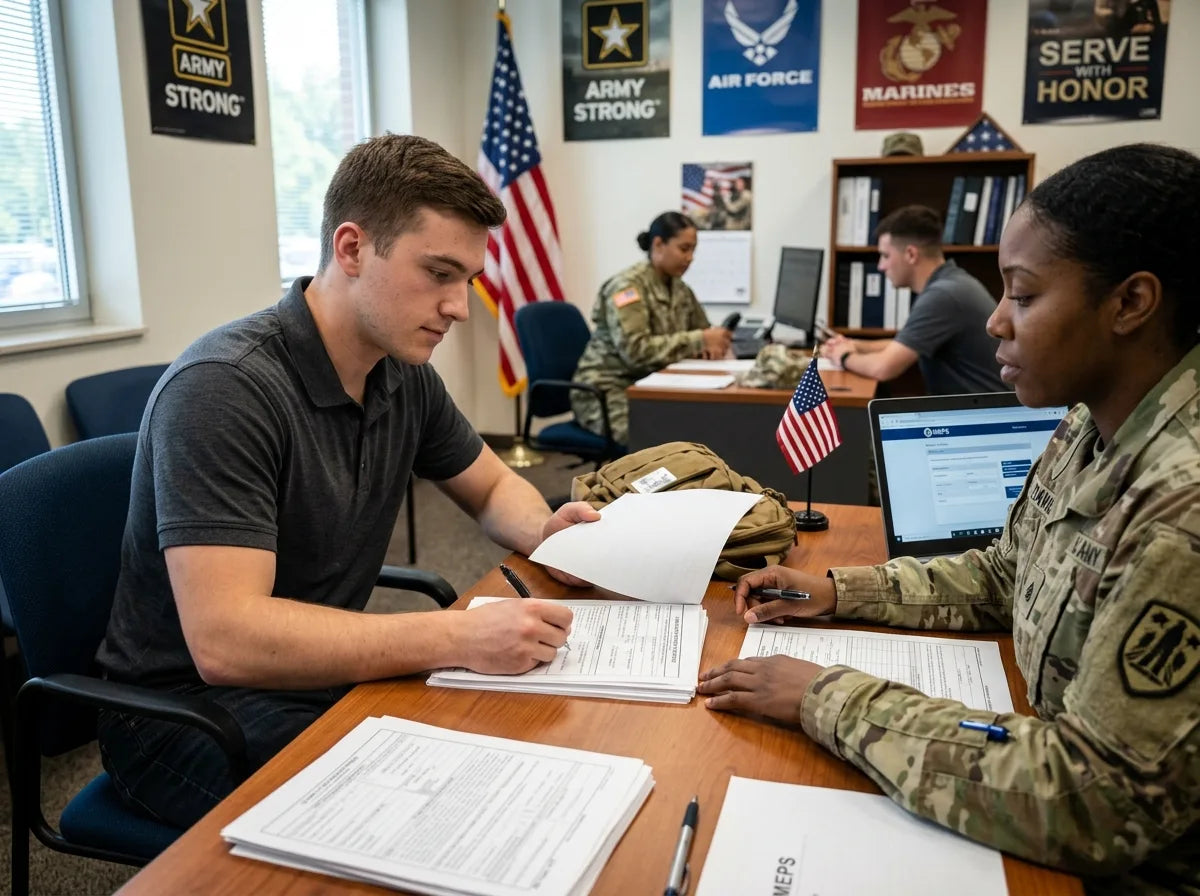
Many applicants run into avoidable problems that delay or derail their enlistment. Knowing what not to do is just as important as following the right steps.
- Hiding medical or legal history – MEPS records are thorough; omissions can result in discharge or criminal charges
- Failing to prepare for the ASVAB – low scores limit your job options significantly
- Not researching job options before MEPS – you may feel pressured to accept an unfavorable MOS on the spot
- Ignoring the fine print in your enlistment contract – understand your commitment length and any conditions attached to bonuses
- Poor physical preparation – arriving out of shape can delay your ship date or affect your performance in basic training
- Choosing a branch without considering lifestyle fit – each branch has a very different culture and daily reality
🎖️ Preparing Yourself Before You Enlist
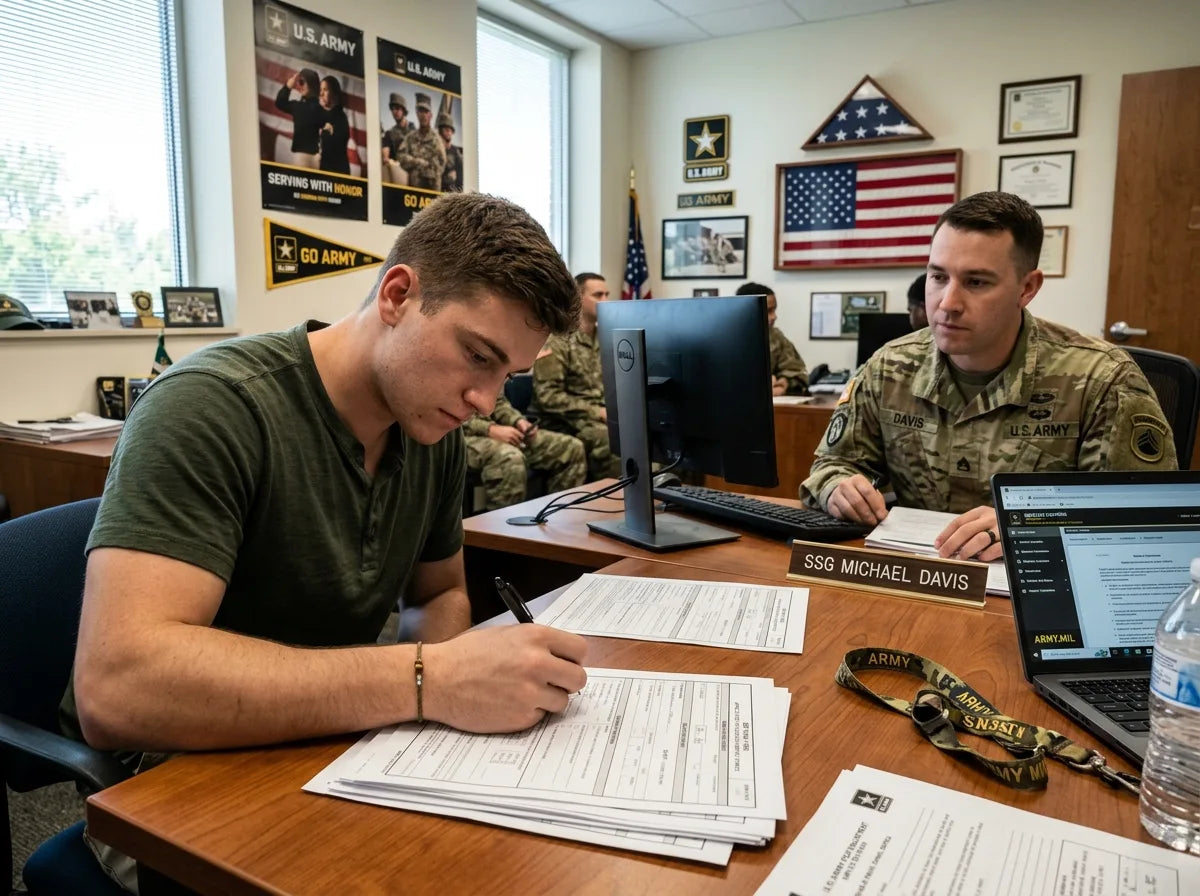
The recruits who have the smoothest enlistment experience are those who prepared in advance. Physical fitness, test preparation, and financial literacy all play a role.
Physical Fitness Preparation
Start a structured fitness routine before you even contact a recruiter. Focus on running, push-ups, sit-ups, and pull-ups depending on your target branch’s fitness test standards. The Army Combat Fitness Test (ACFT), Navy Physical Readiness Test (PRT), and Marine Corps Physical Fitness Test (PFT) all have specific standards that you can find on each branch’s official website and train toward in advance.
ASVAB Study
Treat the ASVAB like a college entrance exam. Free study guides, practice tests, and prep books are widely available. Focus on the areas most relevant to your desired job field. A higher score doesn’t just open more jobs, it can also make you a more competitive candidate for enlistment bonuses and special programs.
Financial and Personal Affairs
Before you ship to basic training, organize your personal finances, inform your employer, and ensure any legal or family obligations are addressed. Setting up a power of attorney is recommended for recruits who have financial accounts, leases, or dependents to manage while they’re away.
One practical step many recruits overlook is getting their military identification sorted early. Once you’ve enlisted and are officially in the system, understanding how to get a military ID is important because this card is your key to accessing base facilities, benefits, and services both during and after your service.
🔍 Active Duty vs. Reserve vs. National Guard

Not every military career means full-time service. Understanding your options helps you find the right fit for your life situation.
Active duty means full-time military service with full pay, benefits, and the possibility of being stationed anywhere in the world. It’s the most immersive option and builds the fastest career progression.
Reserve components (Army Reserve, Navy Reserve, etc.) require one weekend per month and two weeks per year of training, with the possibility of deployment. You maintain a civilian career while staying connected to military service.
The National Guard is state-controlled but can be federalized during national emergencies. Guard members also serve part-time but may be called up for state emergencies like natural disasters in addition to federal deployments.
Each path offers access to education benefits, retirement options, and healthcare, though the scope and timing of those benefits differ. Speak with recruiters from multiple components before committing to understand which structure fits your goals and lifestyle best.
Final Thoughts on Enlisting in the Military
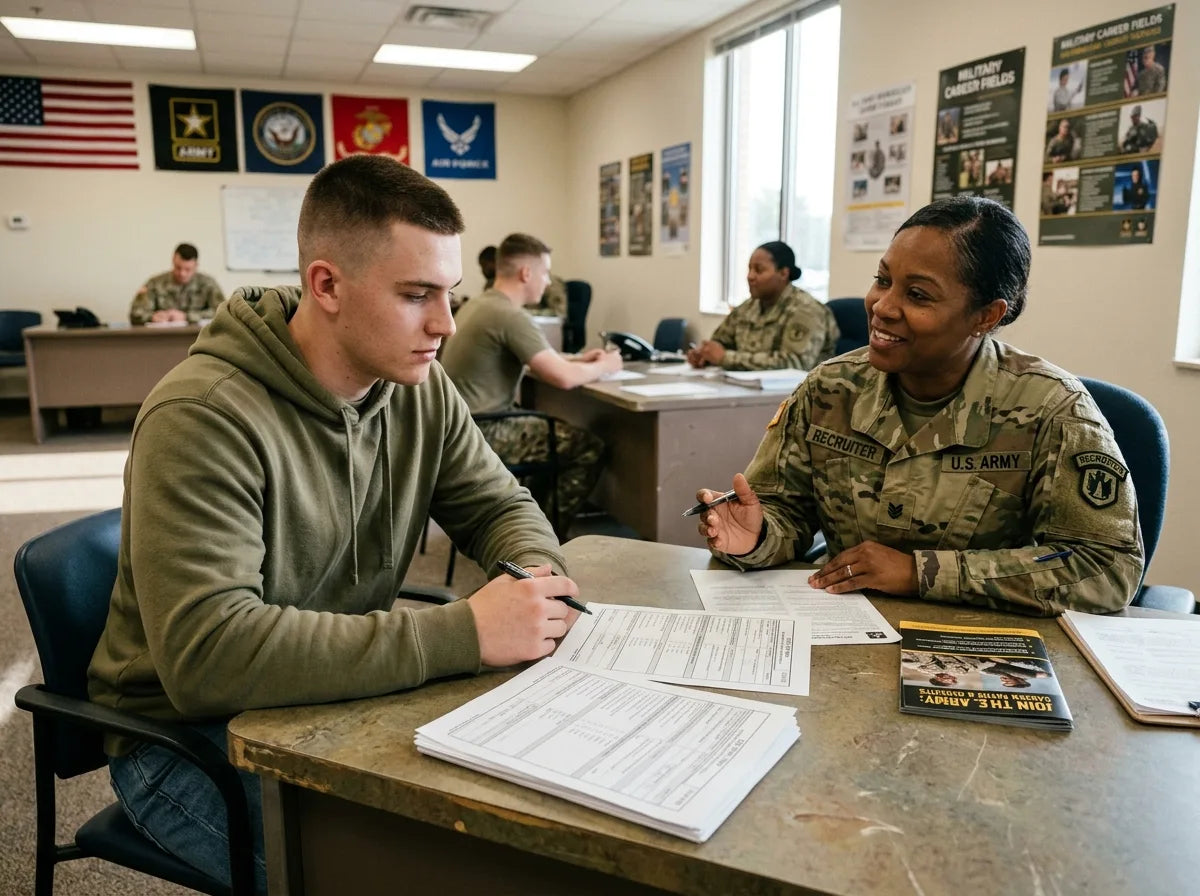
Enlisting in the military is a structured process, but it’s one you can navigate confidently with the right preparation. Know your eligibility, study for the ASVAB, be honest at MEPS, and read your contract carefully before signing. The military offers real career development, education benefits, and a sense of purpose that’s hard to find elsewhere. Do your research, prepare your body and mind, and approach the process with clear goals. The commitment is serious, but so are the rewards for those who are ready for it.