
What Were the Military Districts During Reconstruction
After the Civil War, the United States faced a massive challenge: how to reintegrate the defeated Confederate states. Congress answered with a bold, controversial solution – dividing the South into military zones governed by Union generals. Understanding what the military districts during Reconstruction were reveals how federal power reshaped a broken nation.
🏛️ The Reconstruction Acts and the Birth of Military Districts
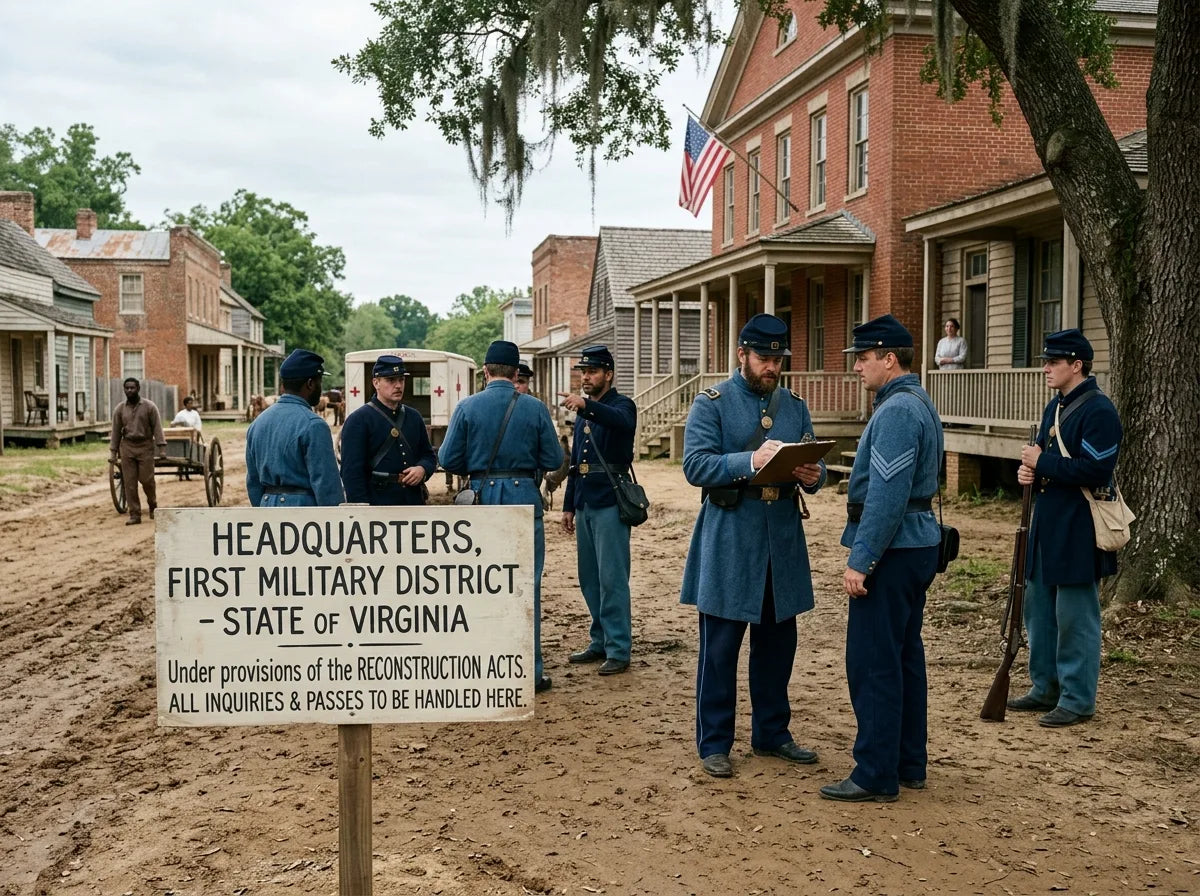
The Reconstruction Acts of 1867 are where the story begins. Passed by a Radical Republican-controlled Congress over President Andrew Johnson’s vetoes, these laws fundamentally changed how the South would be governed. Congress declared the existing Southern state governments illegitimate and placed the region under direct military authority.
The First Reconstruction Act, passed on March 2, 1867, divided ten former Confederate states into five military districts. Tennessee was excluded because it had already ratified the Fourteenth Amendment and been readmitted to the Union. Each district was placed under the command of a Union Army general with broad authority to maintain order, protect civil rights, and oversee the transition to civilian government.
This was an unprecedented use of federal military power in peacetime. The generals commanding these districts had authority that superseded local courts and civilian officials. They could remove state officials, establish military tribunals, and enforce federal law directly – powers that sparked fierce debate about constitutional limits and federal overreach.
🗺️ The Five Military Districts: A Complete Breakdown
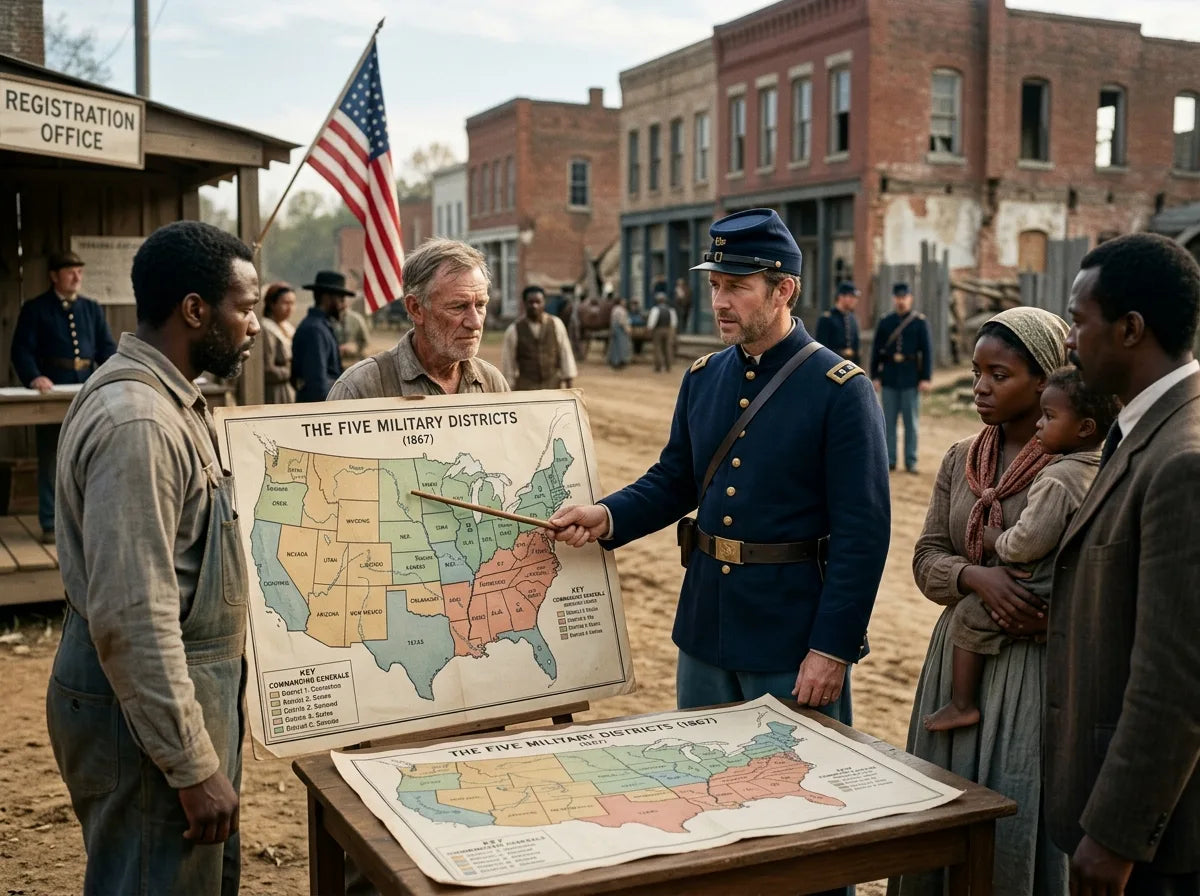
Each of the five districts covered specific former Confederate states and was assigned a commanding general. Here is a clear overview of how the South was divided:
| 🏴 Military District | States Included | First Commanding General |
|---|---|---|
| First Military District | Virginia | Major General John Schofield |
| Second Military District | North Carolina, South Carolina | Major General Daniel Sickles |
| Third Military District | Alabama, Florida, Georgia | Major General John Pope |
| Fourth Military District | Arkansas, Mississippi | Major General Edward Ord |
| Fifth Military District | Louisiana, Texas | Major General Philip Sheridan |
Each commanding general had significant latitude in how they administered their district. Some, like Philip Sheridan in the Fifth District, took an aggressive approach – removing uncooperative state officials and actively protecting Black citizens’ rights. Others were more moderate in their methods, reflecting the range of opinions within the Union Army itself.
⚔️ Powers and Responsibilities of District Commanders

The authority granted to these military commanders was sweeping. Understanding what they could actually do helps clarify why this period was so transformative, and so contested.
Maintaining Order and Protecting Freedpeople
One of the primary duties of each district commander was protecting formerly enslaved people and Unionist citizens from violence. The postwar South was dangerous for Black Americans, with white supremacist violence widespread. Commanders could deploy troops, establish military courts, and bypass civilian legal systems that routinely failed to protect Black citizens.
The Freedmen’s Bureau worked alongside military commanders, though it operated under a separate authority. Together, they represented the federal government’s attempt to ensure that emancipation meant something real on the ground – not just on paper.
Overseeing Voter Registration and Elections
District commanders were also responsible for supervising the voter registration process. The Reconstruction Acts required Southern states to register Black male voters and hold constitutional conventions before being readmitted to the Union. Commanders had to ensure these processes were carried out fairly, which often meant confronting local resistance head-on.
This was genuinely revolutionary. For the first time, Black men were registered as voters across the South, fundamentally changing the political landscape. Military oversight was the only thing making it possible in many areas.
Removing and Appointing Officials
Commanders had the power to remove state and local officials deemed obstructionist or disloyal. This was used to varying degrees across the five districts. General Sheridan was particularly active in this regard, removing the governors of Louisiana and Texas, which contributed to his eventual reassignment by President Johnson.
Just as the military’s role in civilian governance has always raised questions – similar to debates about what military branches are front line soldiers and how their roles intersect with civilian life – the Reconstruction district commanders occupied an unusual space between war and peace, authority and accountability.
🔄 How States Exited Military Rule
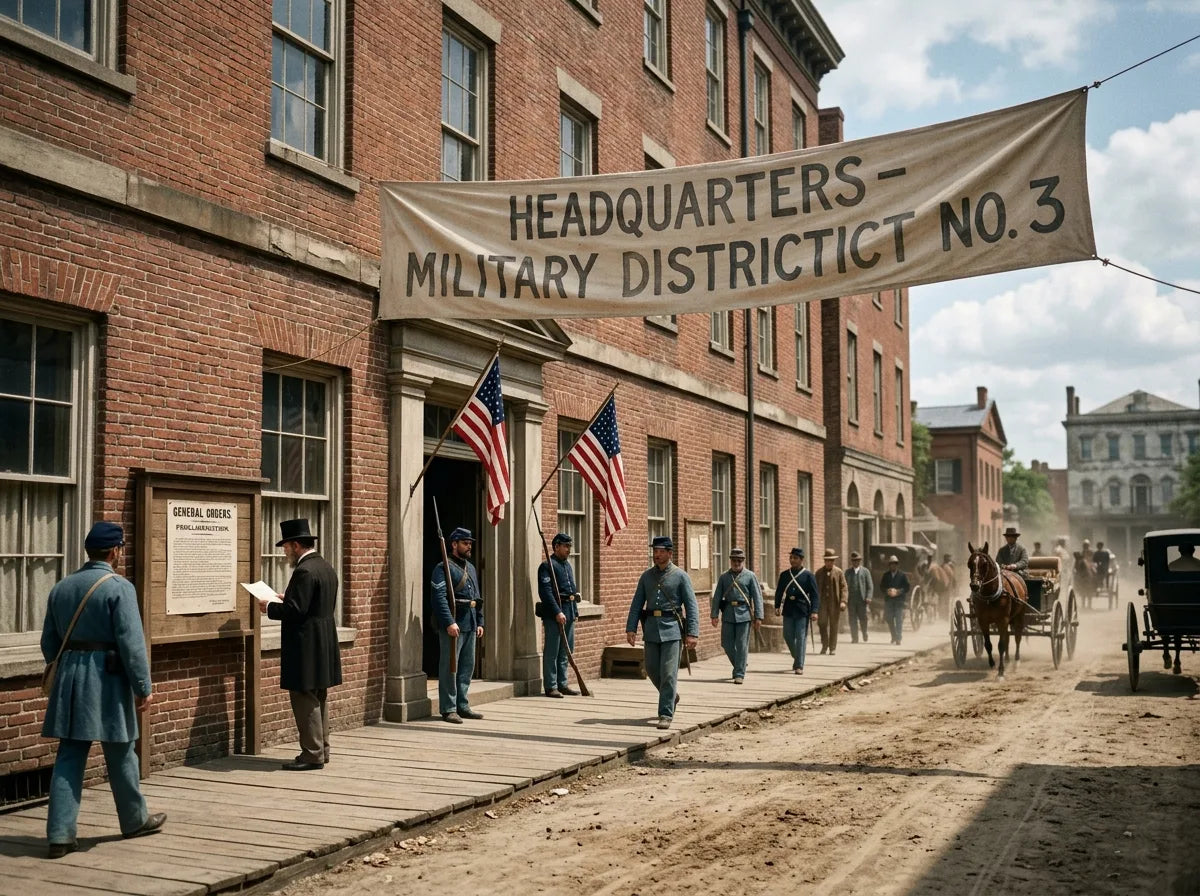
Military rule was not intended to be permanent. Congress established a clear path for former Confederate states to return to civilian self-governance and full representation in Congress. The requirements were specific and non-negotiable.
To exit military rule, each state had to:
- Hold a constitutional convention with delegates elected by eligible voters, including Black men
- Draft a new state constitution that guaranteed Black male suffrage
- Have that constitution ratified by a majority of registered voters
- Ratify the Fourteenth Amendment to the U.S. Constitution
- Have Congress approve the new state constitution
- Elect a new state government under the new constitution
States were readmitted at different times between 1868 and 1870. Georgia was briefly readmitted and then returned to military rule after its legislature expelled Black members, illustrating how contested and fragile the process was. The last states to be readmitted were Virginia, Mississippi, Texas, and Georgia in 1870, after they also ratified the Fifteenth Amendment.
⚠️ Challenges and Controversies of Military Reconstruction
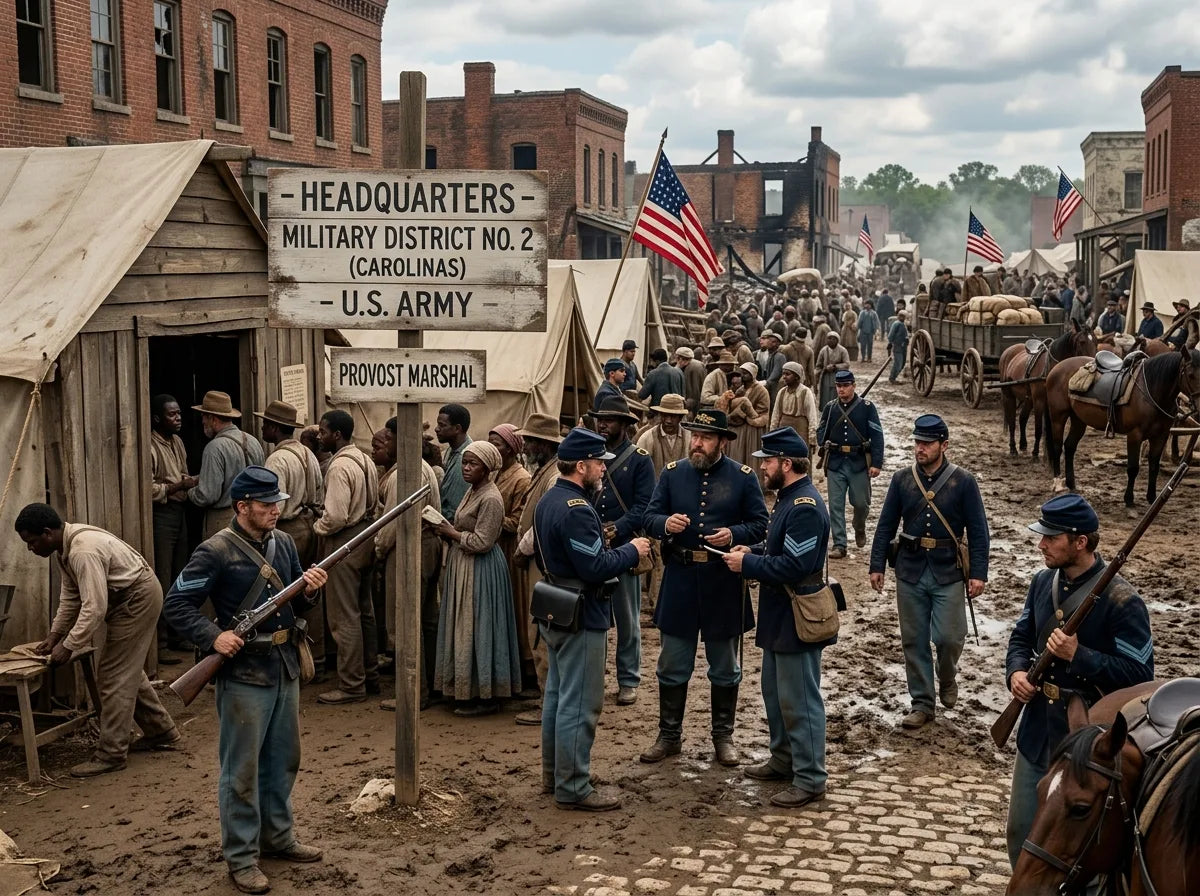
Military Reconstruction was deeply controversial from the start and remained so throughout its existence. The tensions it created shaped American politics for generations.
President Johnson’s Opposition
Andrew Johnson fought the Reconstruction Acts at every turn. He vetoed each piece of Reconstruction legislation, though Congress overrode him each time. He also tried to undermine military commanders by reassigning those who were too aggressive in enforcing the law. His removal of Secretary of War Edwin Stanton led directly to his impeachment by the House of Representatives in 1868, though the Senate fell one vote short of conviction.
Johnson’s resistance reflected a broader Democratic and conservative argument: that military rule over civilian populations violated constitutional principles and punished the South excessively. This debate about the proper limits of federal power echoes through American political history to this day.
Resistance from White Southerners
White Southerners who opposed Reconstruction used a range of tactics to resist military authority. Paramilitary organizations like the Ku Klux Klan emerged specifically to terrorize Black voters and Reconstruction officials. This violence forced military commanders to respond with force, but troop levels were never sufficient to police the entire South effectively.
The gap between what military Reconstruction aimed to achieve and what it could actually enforce with limited resources was a fundamental weakness of the entire system.
The Question of Constitutional Authority
Legal scholars and politicians debated whether Congress had the authority to impose military government on states that were, technically, still part of the Union. The Supreme Court largely avoided ruling directly on the constitutionality of the Reconstruction Acts, though it did hear related cases. This legal ambiguity added to the instability of the entire Reconstruction project.
📜 The Legacy of the Military Districts
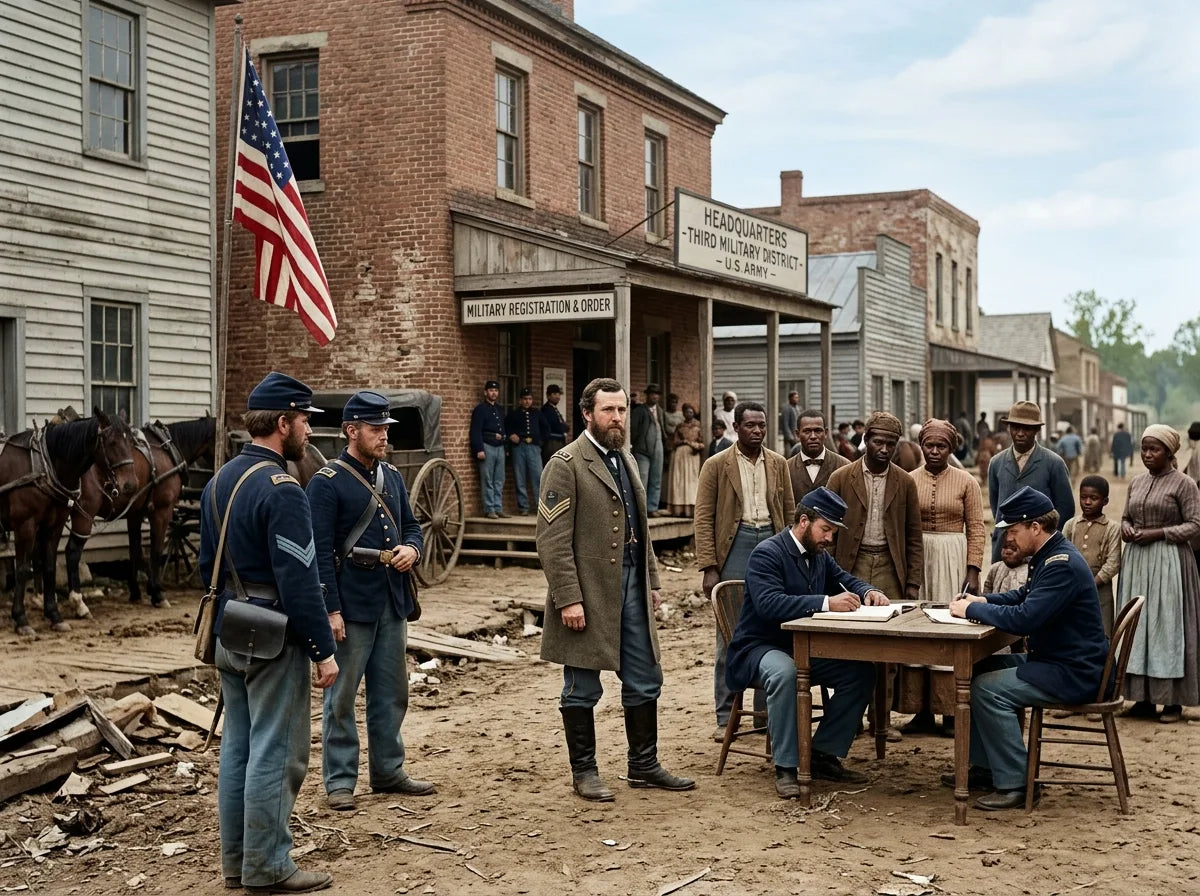
The five military districts of Reconstruction left a complicated legacy. On one hand, they enabled genuine progress: Black men voted, held office, and participated in constitutional conventions across the South for the first time. New state constitutions established public school systems and expanded civil rights in ways that had never existed before.
On the other hand, military Reconstruction ended before its goals were fully achieved. As federal troops were gradually withdrawn and political will in the North faded, the gains of Reconstruction were systematically dismantled through violence, voter suppression, and discriminatory legislation. The period known as Redemption saw former Confederates retake control of Southern governments throughout the 1870s.
The history of military oversight and its limits is also reflected in later debates about the military’s evolving role – much like the historical transition documented in discussions about what year the military stopped using the sword, where changing technologies and doctrines forced institutions to adapt to new realities. Reconstruction similarly forced the U.S. military into a role it was not fully prepared for and ultimately could not sustain.
Historians continue to debate whether more sustained military presence and federal commitment could have produced different long-term outcomes. What is clear is that the five military districts represented one of the most ambitious uses of federal power in American history, with consequences that shaped the country for over a century.
✅ Key Takeaways
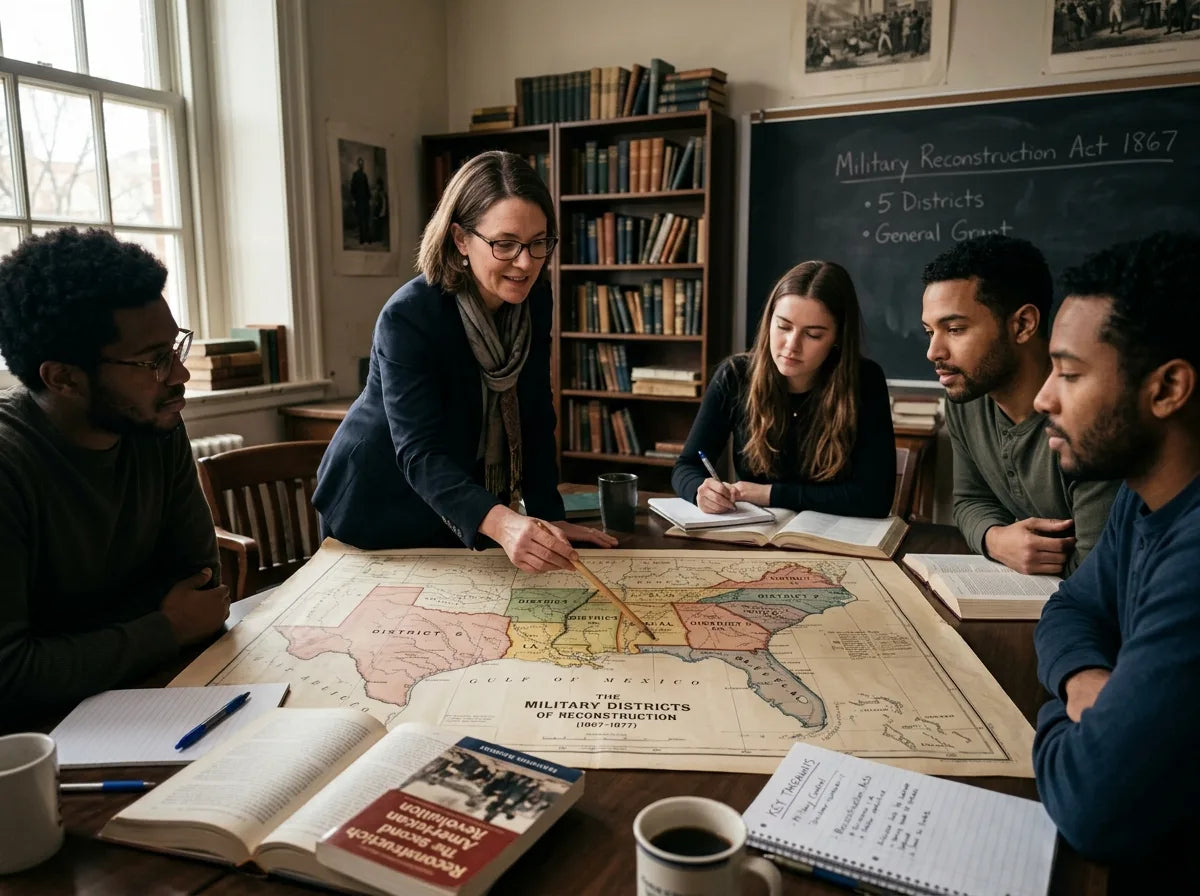
The five military districts established by the Reconstruction Acts of 1867 divided ten former Confederate states under Union Army command. Each district was led by a general with broad authority to maintain order, oversee elections, and protect the rights of Black citizens. States could exit military rule by meeting specific constitutional requirements, including ratifying the Fourteenth Amendment. The system achieved real but incomplete progress before political will collapsed and federal oversight ended.
Understanding this period means grappling with both what was accomplished and what was left unfinished. The military districts were a bold experiment in using federal power to reshape a society – one that came closer to success than its critics admitted, and fell shorter than its supporters hoped. That tension is central to any honest reckoning with American Reconstruction history.