
What Is SAS Military
The SAS military is one of the most elite special forces units in the world. Founded in Britain, this regiment has shaped modern special operations warfare. But what exactly is the SAS, what do they do, and why do they carry such legendary status? Here is everything you need to know.
🎯 What Is the SAS Military? The Basics Explained
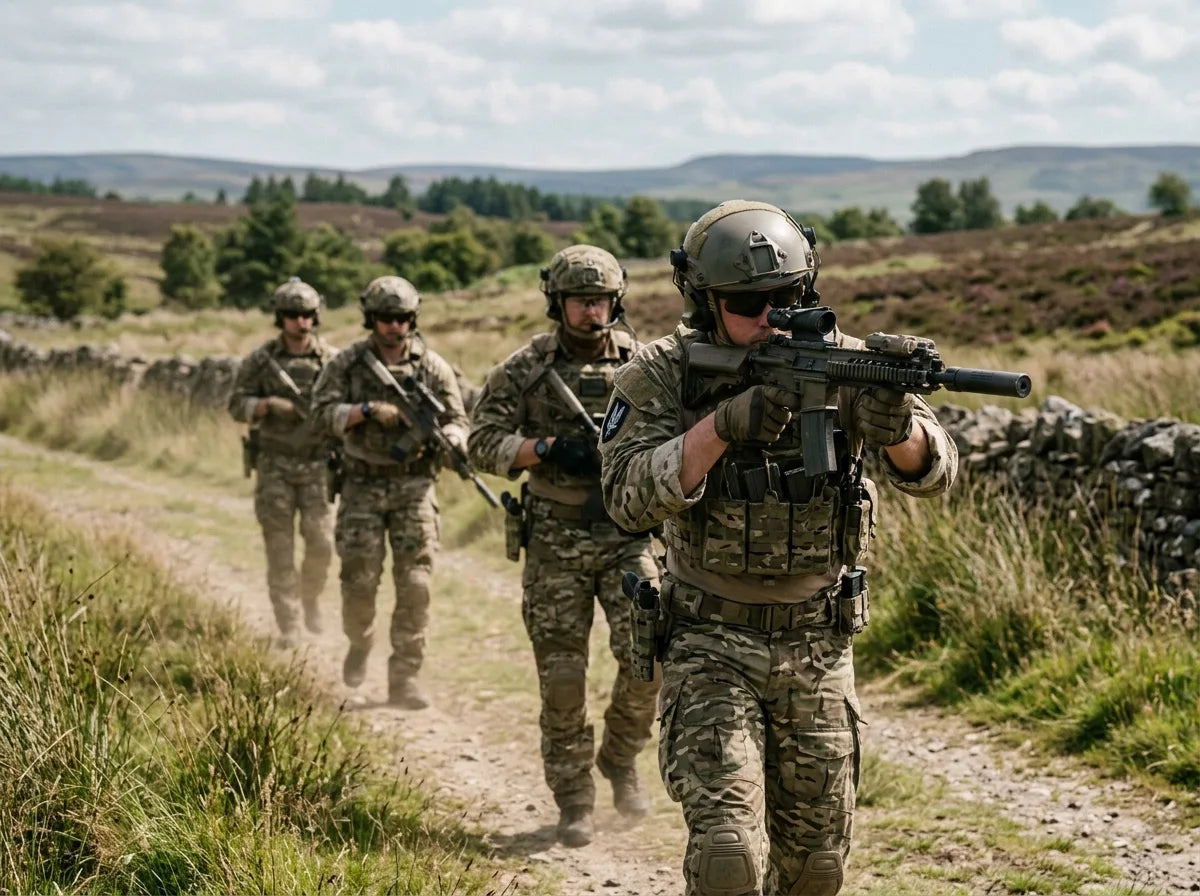
The Special Air Service, commonly known as the SAS, is a special forces regiment of the British Army. It operates under the United Kingdom’s Directorate of Special Forces and is widely regarded as one of the most capable and respected elite military units on the planet.
The SAS is not a conventional military unit. It is a tier-one special operations force, meaning it handles the most sensitive, high-risk, and complex missions that regular military units cannot or do not undertake. From counter-terrorism to hostage rescue, their operational scope is vast.
The regiment is based primarily at Stirling Lines in Hereford, England, which is why SAS soldiers are sometimes informally called “the Regiment” or simply “Hereford.” Their motto, Who Dares Wins, reflects the aggressive, calculated mindset that defines their approach to warfare.
📜 The History and Origins of the SAS
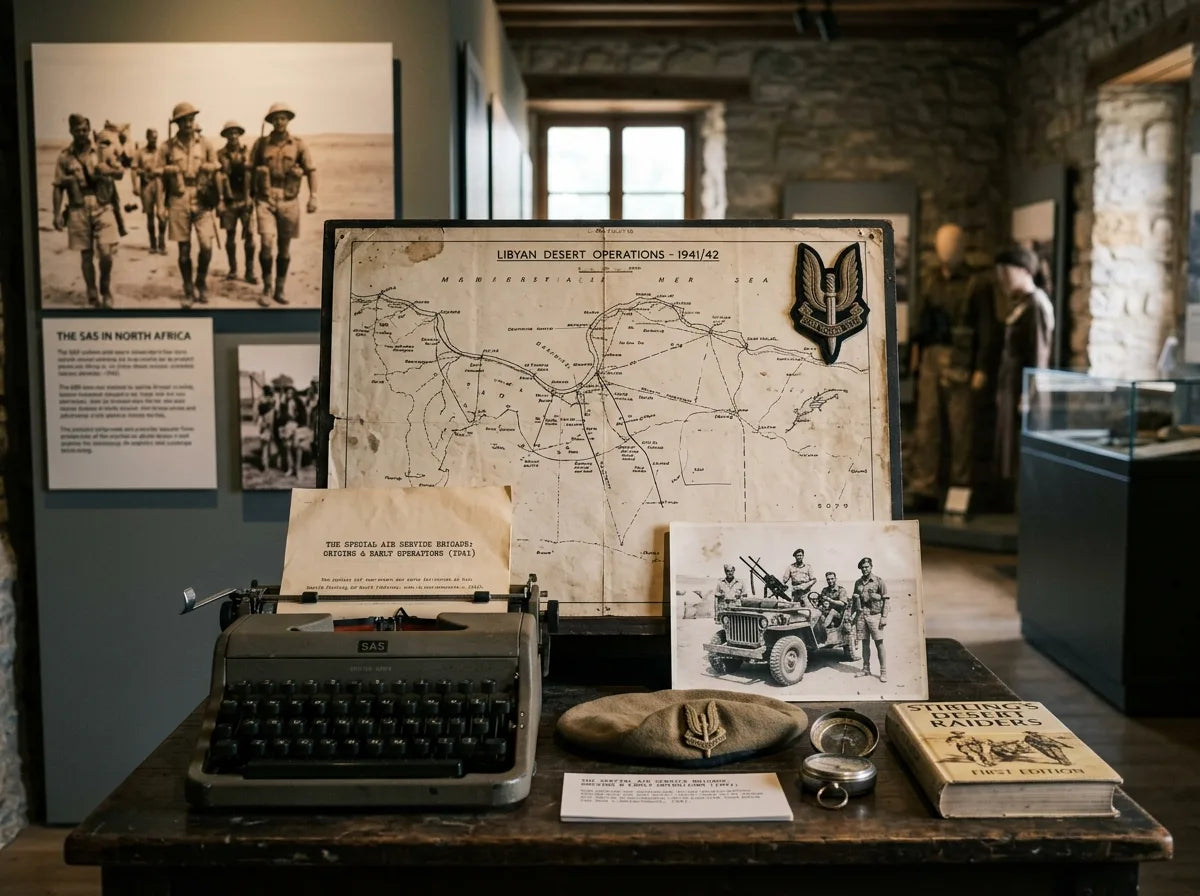
The SAS was founded in 1941 during World War II by Lieutenant David Stirling, a British Army officer who believed that small, highly trained teams could achieve results that large conventional forces could not. His concept was radical at the time: insert a handful of elite soldiers deep behind enemy lines to destroy aircraft, supply lines, and infrastructure.
The original unit operated in the North African desert campaign, conducting raids on German and Italian airfields. These early operations proved extraordinarily effective, destroying hundreds of enemy aircraft on the ground with minimal British losses.
From World War II to Modern Operations
After the war, the SAS was briefly disbanded but reformed in 1947 as part of the Territorial Army, then re-established as a regular army unit in 1952. From that point, the regiment has been continuously active in conflicts across the globe.
Key historical deployments include:
- The Malayan Emergency in the 1950s, where SAS soldiers pioneered jungle warfare tactics
- Operations in Oman and Borneo during the 1960s and 1970s
- The Iranian Embassy Siege in 1980, which brought the SAS to global public attention
- Operations during the Falklands War in 1982
- Deployments in the Gulf War, Bosnia, Afghanistan, and Iraq
- Ongoing counter-terrorism operations worldwide
The Iranian Embassy Siege remains one of the most defining public moments in SAS history. Broadcast live on television, the assault demonstrated the regiment’s speed, precision, and lethality in a hostage rescue scenario.
⚙️ SAS Regiment Structure and Organization
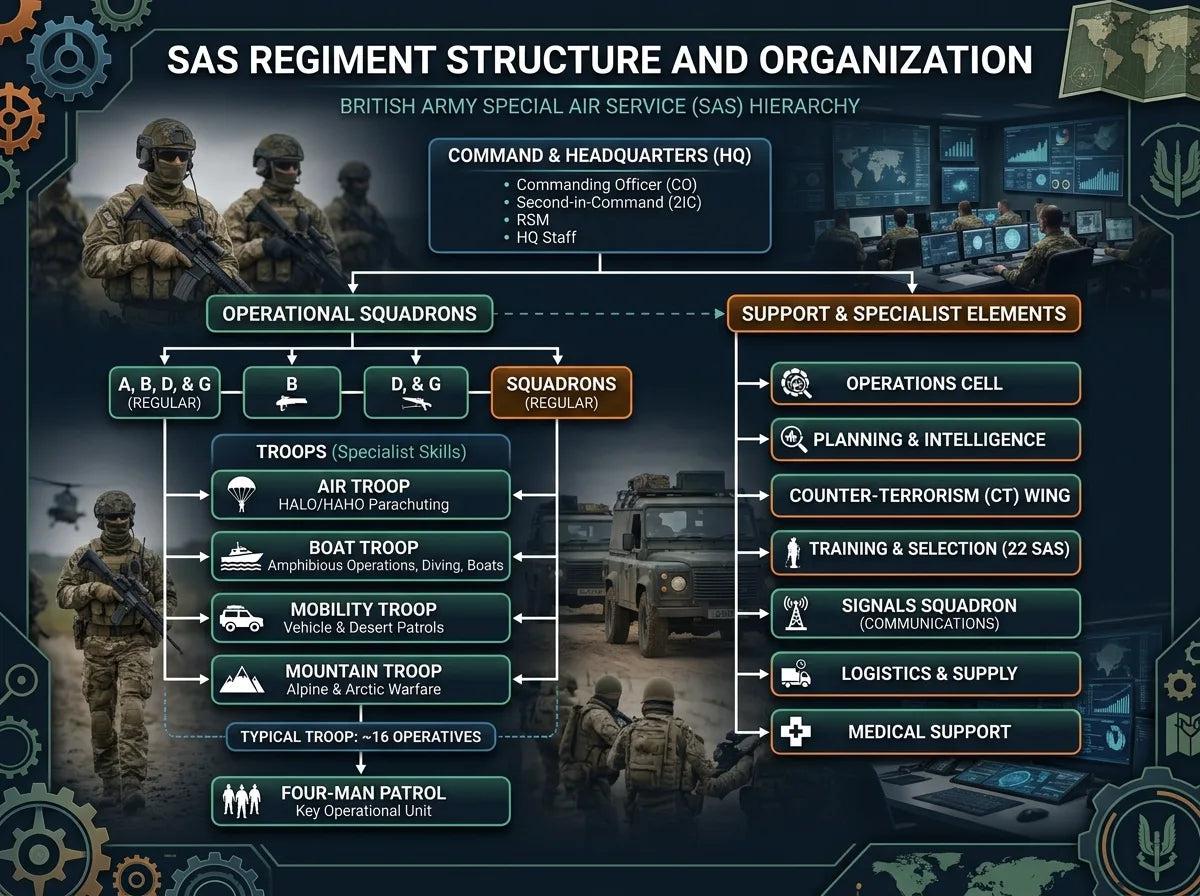
The SAS is organized into four Sabre Squadrons: A, B, D, and G Squadron. Each squadron consists of approximately 60 to 70 soldiers, divided into troops that specialize in different insertion methods and environments.
The Four Specialist Troops
Within each squadron, soldiers are assigned to one of four specialist troops, each focused on a specific method of operating:
- Air Troop – specializes in freefall parachuting and HALO/HAHO insertion techniques
- Boat Troop – focuses on maritime operations, combat diving, and amphibious infiltration
- Mobility Troop – operates vehicles in desert and open terrain environments
- Mountain Troop – trained in Arctic warfare, climbing, and cold-weather survival
Beyond the Sabre Squadrons, the regiment also includes 264 (SAS) Signal Squadron for communications support, a training wing, and various support elements. The regiment works closely with the Special Boat Service (SBS), which is the Royal Marines’ equivalent special forces unit.
🏋️ SAS Selection and Training: The Hardest Military Course in the World
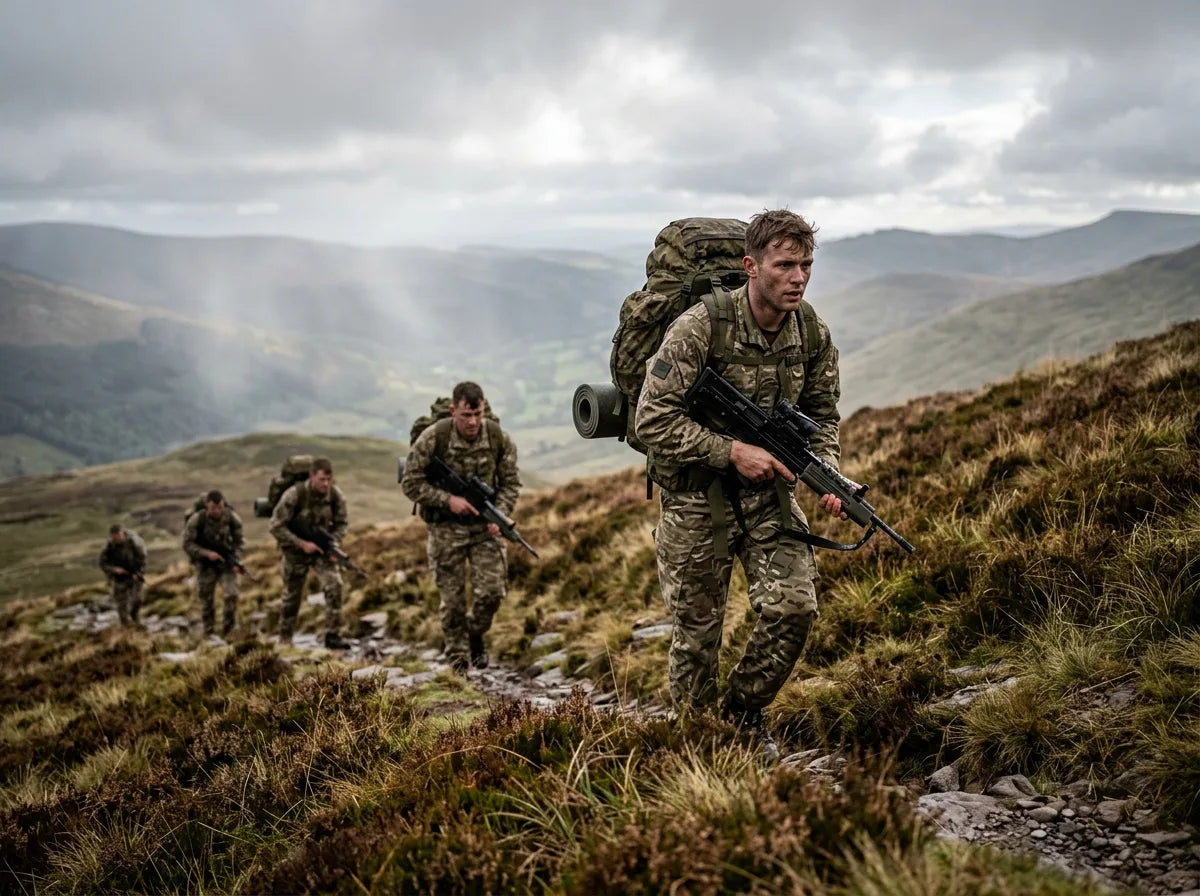
SAS selection is widely considered the most demanding military selection process in existence. The failure rate is consistently over 90%, with some intakes seeing fewer than 10 candidates pass out of 200 or more who attempt it.
Selection takes place primarily in the Brecon Beacons and Black Mountains of Wales, where candidates face extreme physical and mental challenges over several weeks. The process is designed not just to test fitness, but to identify individuals with exceptional mental resilience, self-reliance, and problem-solving ability.
The Phases of SAS Selection
The selection process is broken into distinct phases. The initial phase involves endurance marching across mountainous terrain carrying heavy loads, often in harsh weather conditions. Distances and weights increase progressively, culminating in the infamous “Long Drag” or “Endurance” march, which covers approximately 64 kilometers with a 25 kg Bergen rucksack in under 24 hours.
Candidates who pass the hills phase move on to Jungle Training, typically conducted in Belize or Brunei. This phase tests navigation, survival, and small-unit tactics in one of the most demanding environments on Earth.
The final phase is Combat Survival and Resistance to Interrogation (RTI), where candidates are hunted across the countryside and, if captured, subjected to intense psychological interrogation designed to break their resistance. This phase tests the mental limits of even the most physically capable soldiers.
Those who complete selection then undergo continuation training, including combat diving, parachuting, signals, demolitions, and close-quarter battle (CQB) training before being badged as full SAS soldiers.
Understanding what elite military units do in broader terms is valuable context here – if you want to explore what the military does across different branches and roles, that foundation helps clarify why specialized units like the SAS exist within the wider defense structure.
🌍 SAS Missions and Operational Roles
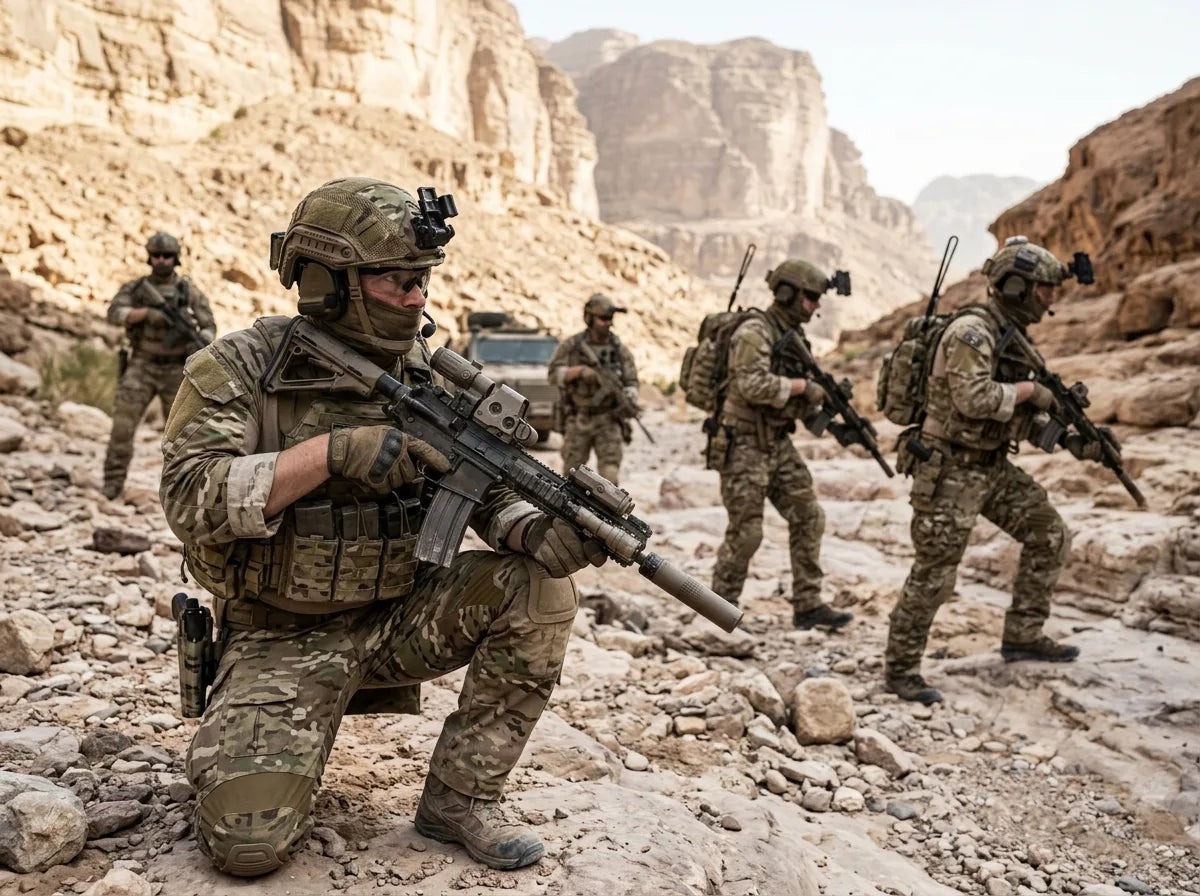
The SAS conducts a wide range of mission types, most of which remain classified. However, based on declassified information and publicly acknowledged operations, the regiment’s core mission sets include several distinct categories.
Counter-Terrorism
The SAS maintains a Counter Revolutionary Warfare (CRW) Wing that provides a permanent counter-terrorism capability. This includes hostage rescue, aircraft assault, and responding to terrorist incidents both domestically and internationally. The regiment’s CRW teams are on standby at all times.
Direct Action
Direct action missions involve short-duration strikes against high-value targets, including enemy commanders, weapons caches, and critical infrastructure. These operations require precise intelligence, speed, and the ability to operate deep inside hostile territory.
Special Reconnaissance
SAS soldiers are trained to conduct covert intelligence gathering behind enemy lines, often remaining undetected for extended periods. This includes observation posts, surveillance operations, and gathering targeting data for larger military operations.
Military Assistance and Training
The regiment frequently deploys to train and advise allied foreign military forces. This role, known as Military Assistance, allows the SAS to extend British influence and build partner nation capabilities without direct combat involvement.
| Mission Type | Description | Example |
|---|---|---|
| Counter-Terrorism | Hostage rescue, threat neutralization | 🏛️ Iranian Embassy 1980 |
| Direct Action | Strikes on high-value targets | 🎯 Iraq, Afghanistan ops |
| Special Reconnaissance | Covert surveillance behind enemy lines | 👁️ Falklands, Gulf War |
| Military Assistance | Training allied forces | 🤝 Multiple global deployments |
🆚 SAS vs. Other Elite Special Forces Units
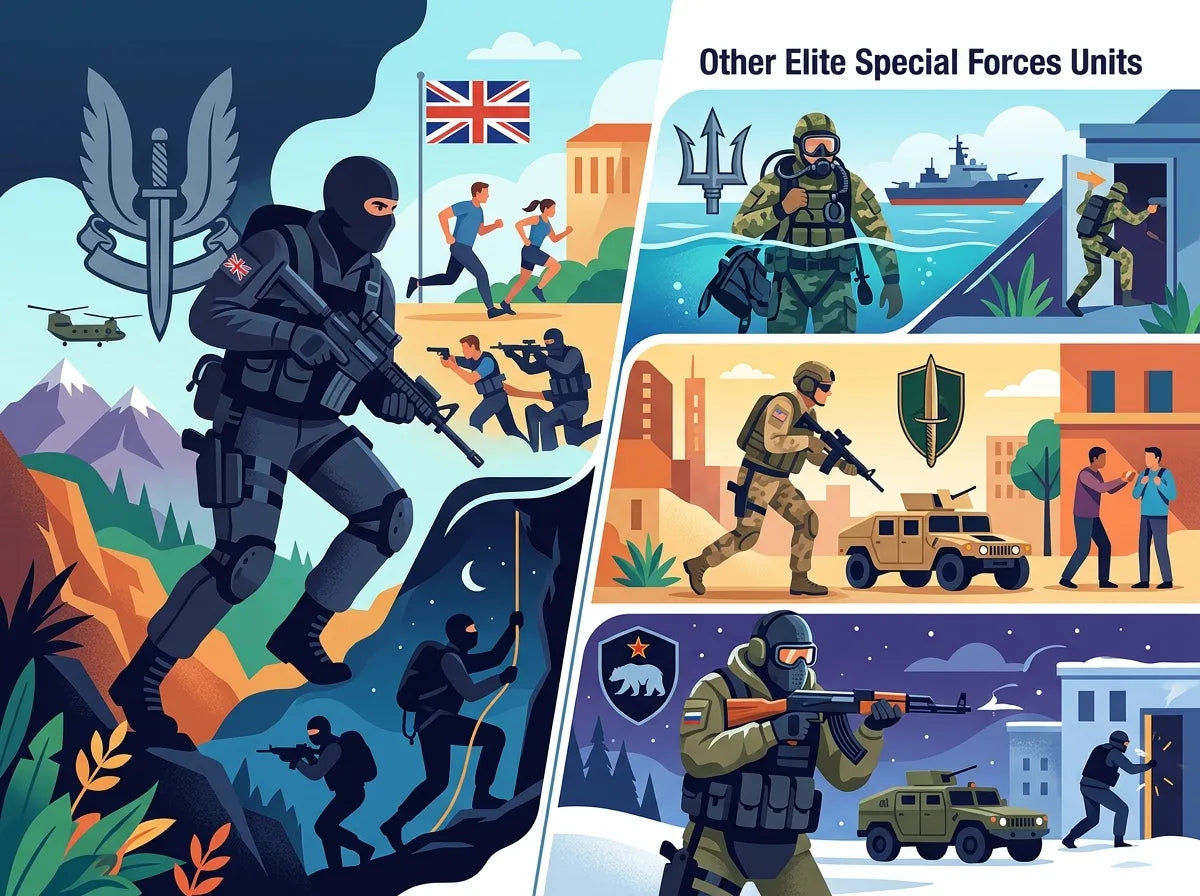
The SAS is frequently compared to other tier-one special forces units around the world. While each unit has its own strengths and specializations, the SAS is consistently ranked among the very best, particularly in counter-terrorism and unconventional warfare.
The US Delta Force (officially 1st Special Forces Operational Detachment-Delta) was directly modeled on the SAS. Its founder, Colonel Charles Beckwith, trained with the SAS and used the regiment as the blueprint for Delta Force’s structure and selection process. This connection reflects the SAS’s global influence on special operations doctrine.
Other comparable units include the US Navy SEALs (DEVGRU/SEAL Team Six), Israel’s Sayeret Matkal, France’s GIGN and 1er RPIMa, and Australia’s SASR (Special Air Service Regiment), which was itself modeled on the British SAS. Each operates differently, but the British SAS remains the standard against which many others are measured.
It is also worth noting that the SAS has influenced how militaries think about mental health and psychological fitness in special operations. The intense psychological demands of selection and operations have driven research into resilience and performance under stress, a topic that connects to broader discussions about military specializations, including considerations around what military branch handles psychiatry and how mental health professionals are integrated into modern armed forces.
✅ Key Facts About the SAS Military
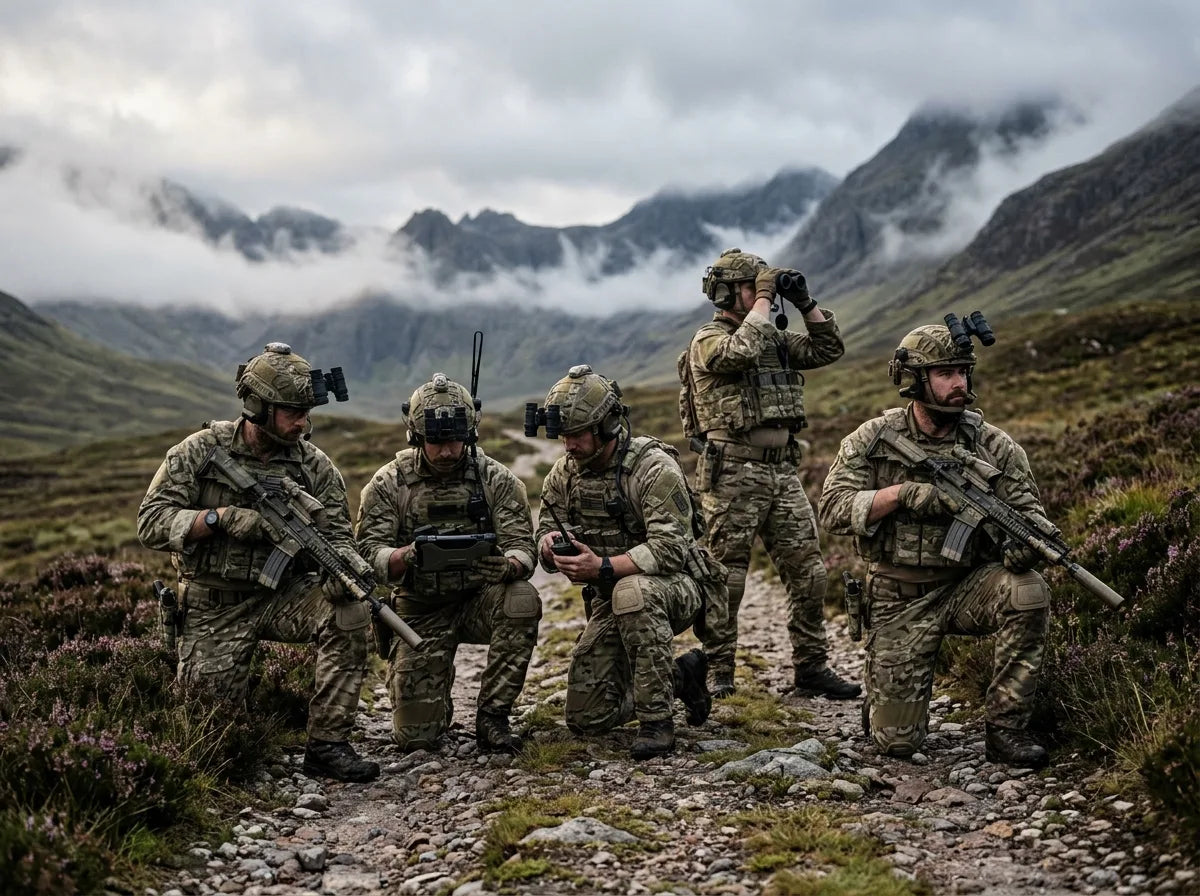
For a quick reference, here are the most important facts about the Special Air Service:
- Full name: 22nd Special Air Service Regiment (22 SAS)
- Founded: 1941 by Lieutenant David Stirling
- Headquarters: Stirling Lines, Hereford, England
- Motto: Who Dares Wins
- Selection pass rate: Typically under 10%
- Parent unit: United Kingdom Special Forces (UKSF)
For further reading, the Wikipedia page on the Special Air Service provides a detailed historical overview of the regiment’s operations and structure.
Conclusion
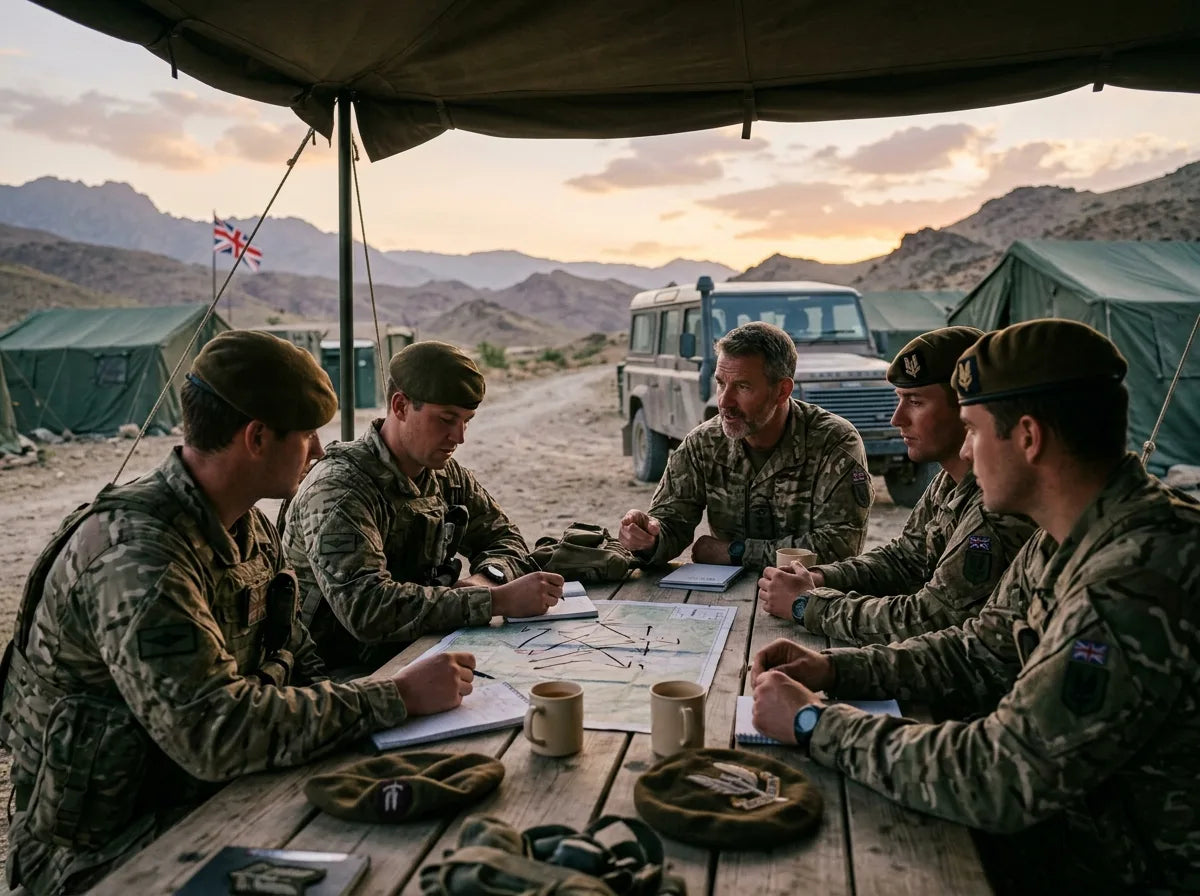
The SAS military is far more than a famous name. It is a regiment built on a specific philosophy: small teams of highly trained, mentally resilient soldiers can achieve strategic results that conventional forces cannot. From its origins in the North African desert to modern counter-terrorism operations, the SAS has consistently proven that principle correct. Understanding the SAS means understanding what truly elite military capability looks like, defined not by numbers but by selection, training, and operational excellence.