
What Military Branch Is Psychiatry
Thinking about a career in military psychiatry but not sure where to start? The branch you choose shapes everything, from your training pipeline to your deployment experience. Here’s a clear breakdown of how psychiatry fits into each military branch and what that means for your career.
🎯 Military Psychiatry: The Big Picture
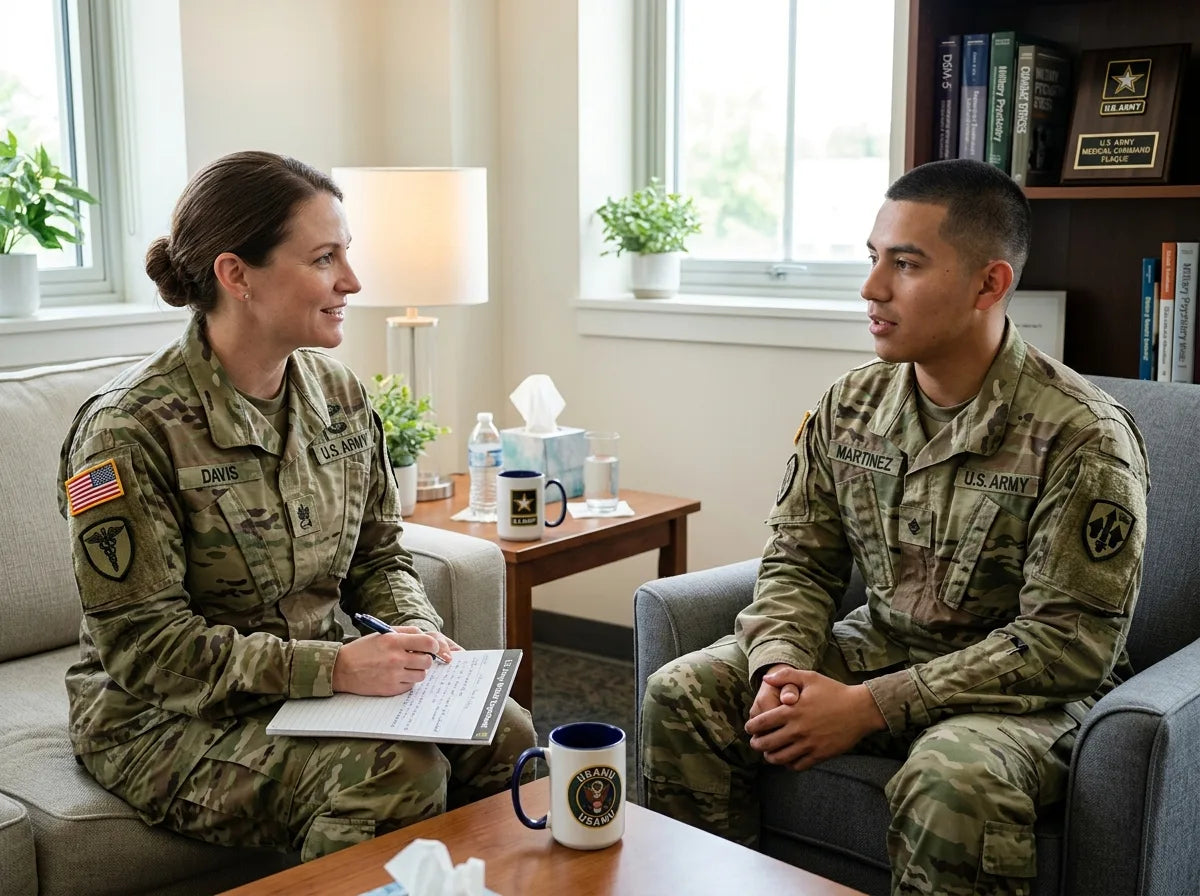
Military psychiatry is available across all branches of the U.S. Armed Forces, including the Army, Navy, Air Force, Marine Corps, Coast Guard, and Space Force. Each branch has its own medical corps structure, but psychiatrists serve under a unified mission: protecting the mental health of service members, veterans, and their families.
Psychiatry in the military isn’t a single-branch specialty. It’s woven into the medical departments of every branch, though the size, scope, and deployment demands vary significantly depending on where you serve.
🏥 Which Military Branch Has the Most Psychiatrists?
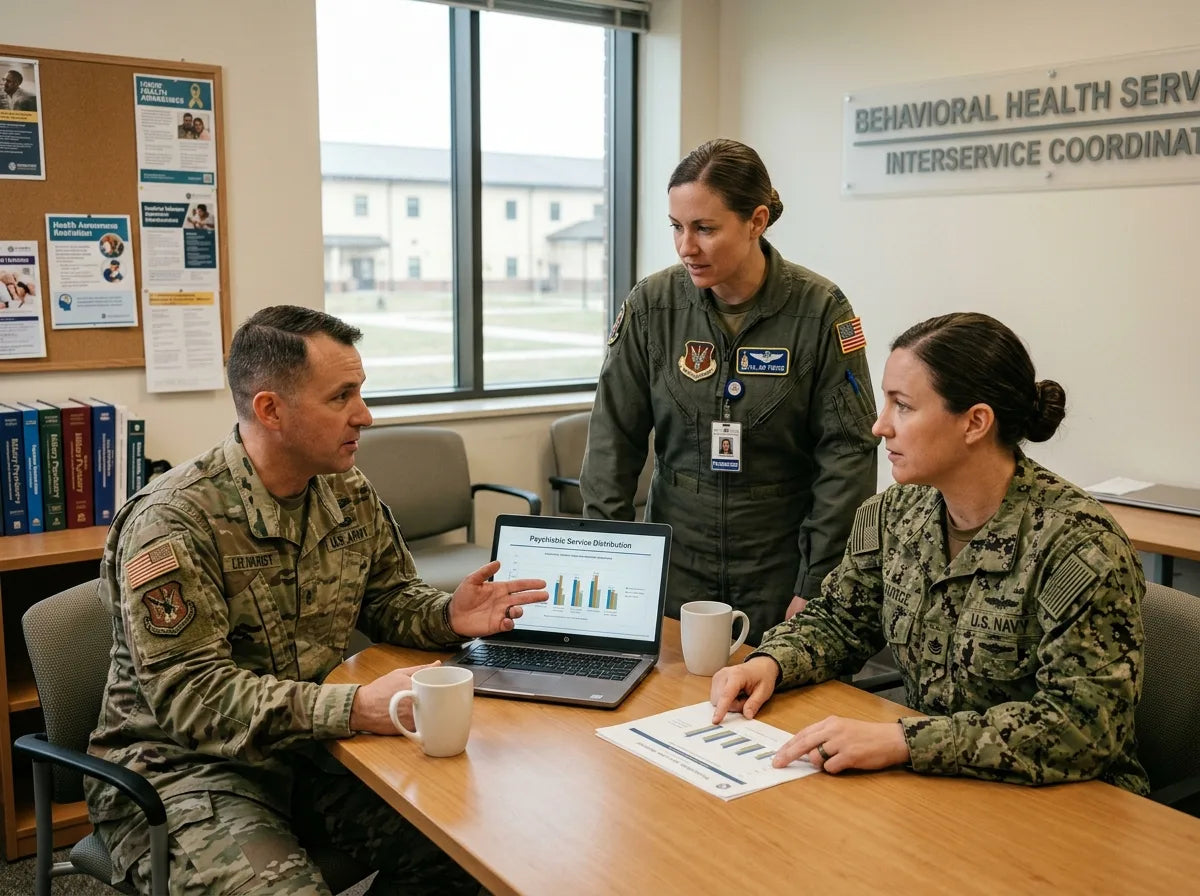
The U.S. Army Medical Corps employs the largest number of military psychiatrists of any branch. This makes sense given that the Army has the highest active-duty personnel count and has historically seen the most ground combat exposure, which directly drives demand for mental health services.
The Army’s behavioral health infrastructure is extensive, with psychiatrists stationed at major installations, combat support hospitals, and deployed alongside units in the field. The Army also runs one of the most well-funded military mental health research programs in the country.
Navy and Marine Corps Psychiatry
The Navy Medical Corps provides psychiatric services not only to Navy sailors but also to Marine Corps personnel. The Marine Corps does not have its own independent medical branch, so Navy medical officers, including psychiatrists, are embedded with Marine units. This creates a unique dual-service role for Navy psychiatrists.
Navy psychiatrists may serve aboard ships, at naval hospitals, or deployed with Marine Expeditionary Units. The environment is distinct from Army settings, often involving long periods at sea and isolation-related mental health challenges.
Air Force Psychiatry
The Air Force Medical Service employs psychiatrists primarily at major air bases and medical centers. Air Force psychiatry tends to be less combat-forward compared to Army deployments, but it handles high-stakes cases involving pilots, nuclear personnel, and high-security clearance holders, where mental fitness evaluations carry serious operational weight.
Coast Guard and Space Force
The Coast Guard has a smaller medical structure and relies partly on partnerships with other branches for psychiatric care. The Space Force, being the newest and smallest branch, is still developing its full medical infrastructure. Psychiatric services for Space Force personnel are currently provided through Air Force medical channels.
📋 How Psychiatrists Are Commissioned in the Military

Military psychiatrists are commissioned officers, not enlisted personnel. To serve as a psychiatrist in any branch, you must complete medical school, residency training in psychiatry, and meet the branch’s officer requirements. You enter as a commissioned officer, typically at the rank of captain (Army/Air Force/Marine Corps) or lieutenant (Navy/Coast Guard).
There are several pathways to becoming a military psychiatrist:
- Health Professions Scholarship Program (HPSP) – The military pays for medical school in exchange for active-duty service after residency
- Uniformed Services University of the Health Sciences (USUHS) – A federal medical school that trains military physicians directly
- Direct Commission – Civilian psychiatrists with completed training can commission directly into a branch
- Reserve Component – Practicing civilian psychiatrists can serve part-time in the Army Reserve, Navy Reserve, or Air Force Reserve
- National Guard – Army and Air National Guard units also have behavioral health officers, including psychiatrists
⚖️ Comparing Military Branches for Psychiatry Careers

Choosing the right branch matters. Each offers different duty stations, deployment frequency, and career development opportunities. Here’s a side-by-side comparison to help you evaluate your options:
| Branch | Medical Corps Name | Deployment Intensity | Unique Features |
|---|---|---|---|
| Army | Army Medical Corps | 🔴 High | Largest program, combat psychiatry |
| Navy | Navy Medical Corps | 🟡 Moderate-High | Serves Marines, shipboard roles |
| Air Force | Air Force Medical Service | 🟡 Moderate | Aviation medicine, clearance evals |
| Marine Corps | Via Navy Medical Corps | 🔴 High | Embedded with combat units |
| Coast Guard | Coast Guard Health Safety | 🟢 Lower | Smaller scale, domestic focus |
| Space Force | Via Air Force Medical | 🟢 Lower | Emerging structure, niche roles |
If you’re drawn to frontline, high-intensity environments, the Army or Navy (with Marines) offers the most direct exposure to combat-related psychiatric conditions like PTSD and acute stress reactions. If you prefer a more clinical, base-focused setting, the Air Force is worth serious consideration.
Understanding specialized military units can also give context to the mental health demands psychiatrists face. For example, reading about what the SAS military does helps illustrate the extreme psychological pressures placed on elite operators, the kind of cases military psychiatrists may encounter in high-readiness environments.
🧠 What Military Psychiatrists Actually Do
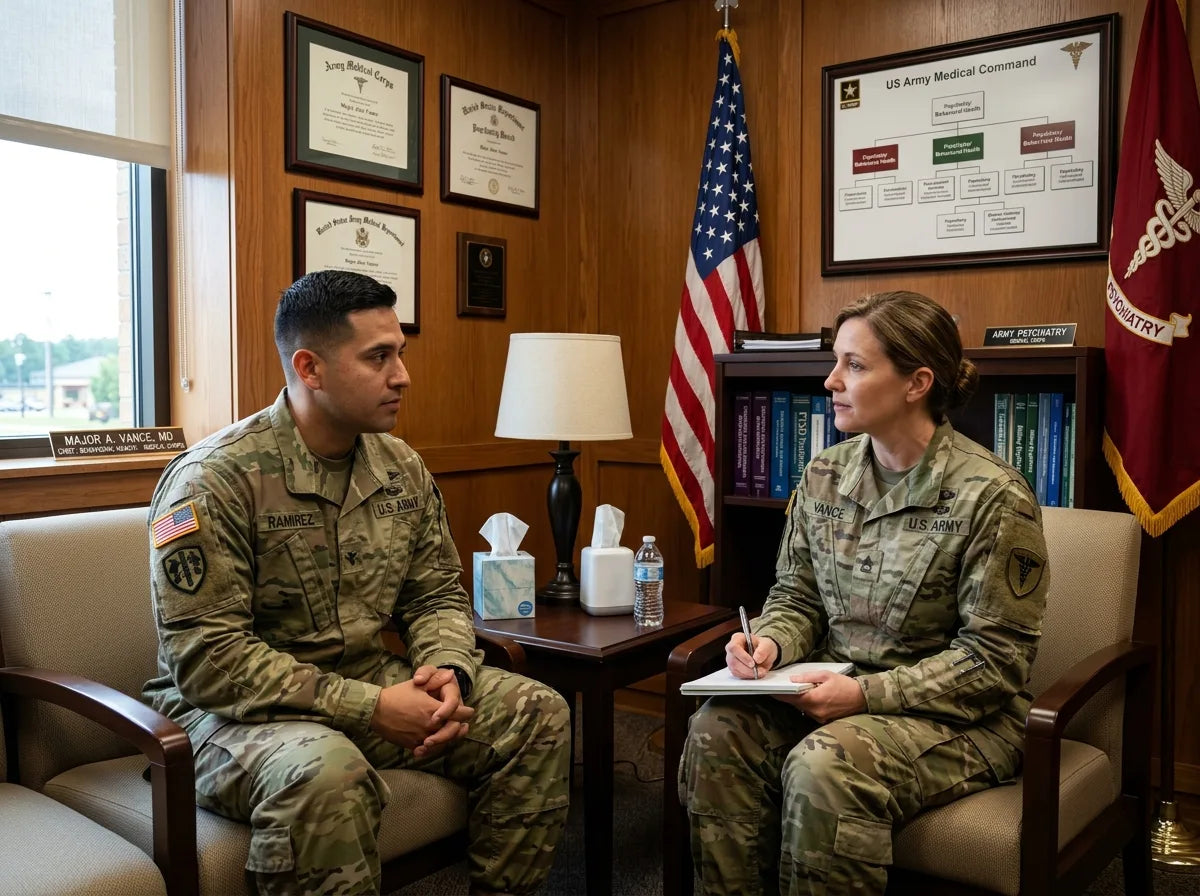
The day-to-day work of a military psychiatrist differs from civilian practice in meaningful ways. You’re not running a private practice. You’re embedded in a command structure, and your patients are active-duty warriors, not voluntary outpatients.
Core responsibilities typically include:
- Diagnosing and treating conditions like PTSD, depression, anxiety, TBI-related psychiatric symptoms, and substance use disorders
- Conducting fitness-for-duty evaluations and return-to-duty assessments
- Supporting commanders with unit-level mental health readiness
- Providing crisis intervention, especially in deployed or high-stress environments
- Collaborating with psychologists, social workers, and chaplains in behavioral health teams
- Advising on medical board proceedings for service members with mental health conditions
One critical distinction: military psychiatrists operate within a dual-role framework. You’re both a physician treating patients and an officer serving the mission. That tension, balancing individual patient care with unit readiness, is something every military psychiatrist navigates throughout their career.
💰 Pay, Benefits, and Career Incentives
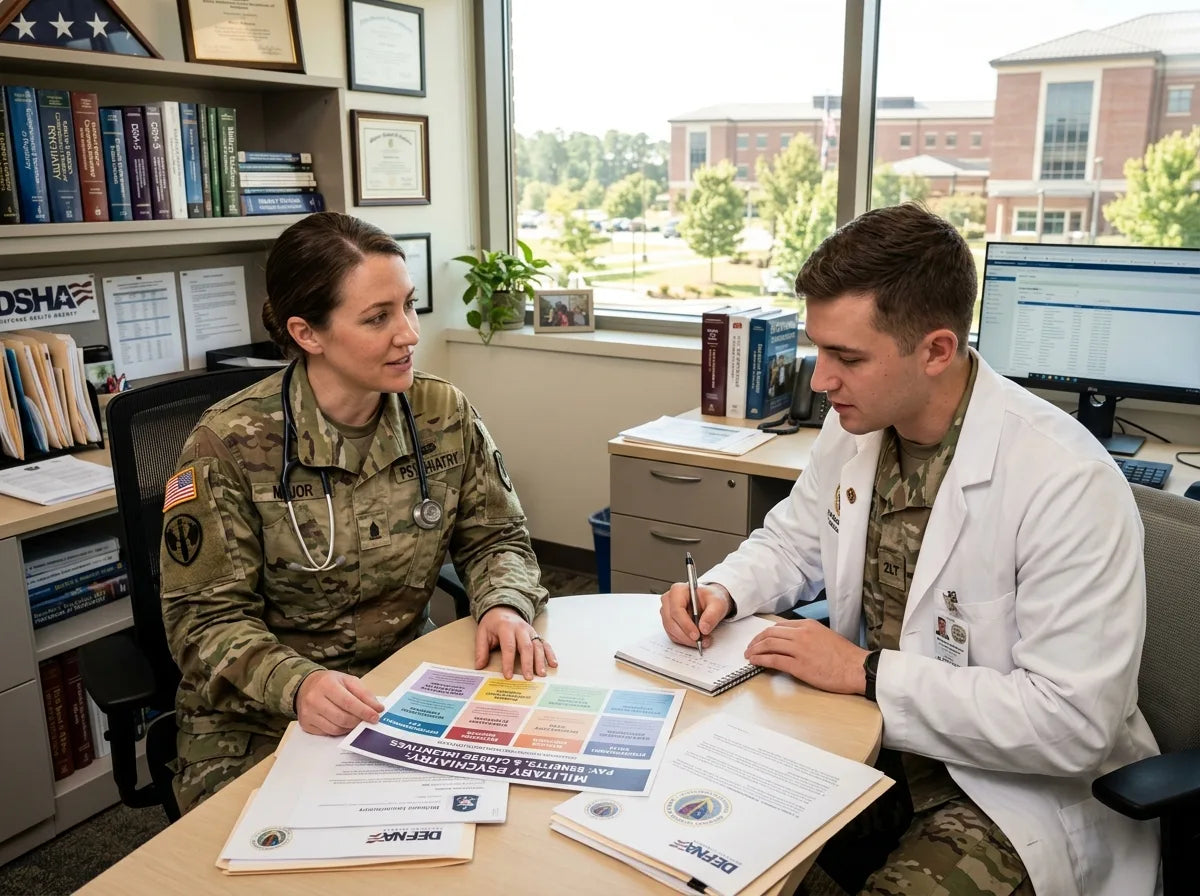
Military psychiatrists receive competitive compensation that includes base pay, specialty pay, and significant non-monetary benefits. The financial package is often more predictable than civilian private practice, with no billing headaches or overhead costs.
Incentive Special Pay (ISP) and Board Certified Pay are available to psychiatrists, adding thousands of dollars annually to base military pay. Add in housing allowances, healthcare coverage, retirement benefits, and student loan repayment through programs like the HPSP, and the total compensation picture becomes attractive, especially for physicians carrying heavy medical school debt.
Service obligations vary. HPSP typically requires one year of active duty for each year of scholarship funding. Direct commissions and USUHS graduates also carry service commitments, usually ranging from three to seven years depending on the program and specialty training received.
🎯 Choosing the Right Branch for Your Psychiatry Career
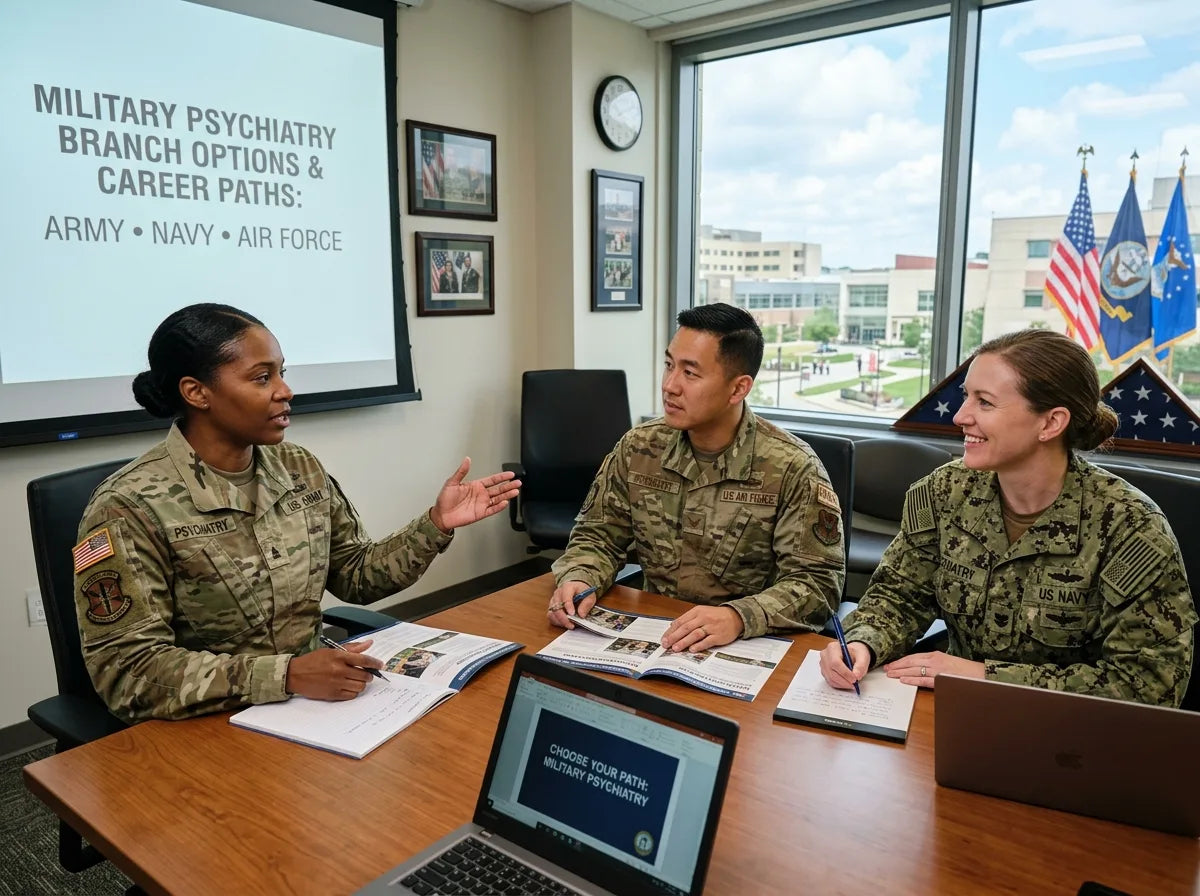
The “best” branch for military psychiatry depends entirely on your personal priorities. There’s no single right answer, but there are smart questions to ask yourself before committing.
Consider your tolerance for deployment. If extended overseas assignments or combat-zone rotations don’t appeal to you, the Air Force or Coast Guard offer more predictable schedules. If you want to work where the need is most acute, the Army or Navy gives you that access.
Think about career development. The Army’s sheer size means more research opportunities, more subspecialty training, and more promotion pathways. Smaller branches offer tighter-knit communities and sometimes faster advancement to leadership roles.
Also consider geography. Each branch has flagship medical centers – Walter Reed National Military Medical Center (Army/Navy), Brooke Army Medical Center, and Wilford Hall (Air Force) are among the most prominent. Where you want to live matters, especially for family stability.
If you’re still weighing your broader military service options beyond the medical track, it’s worth exploring what military branch you should join based on your goals, lifestyle preferences, and long-term career plans.
✅ Final Thoughts
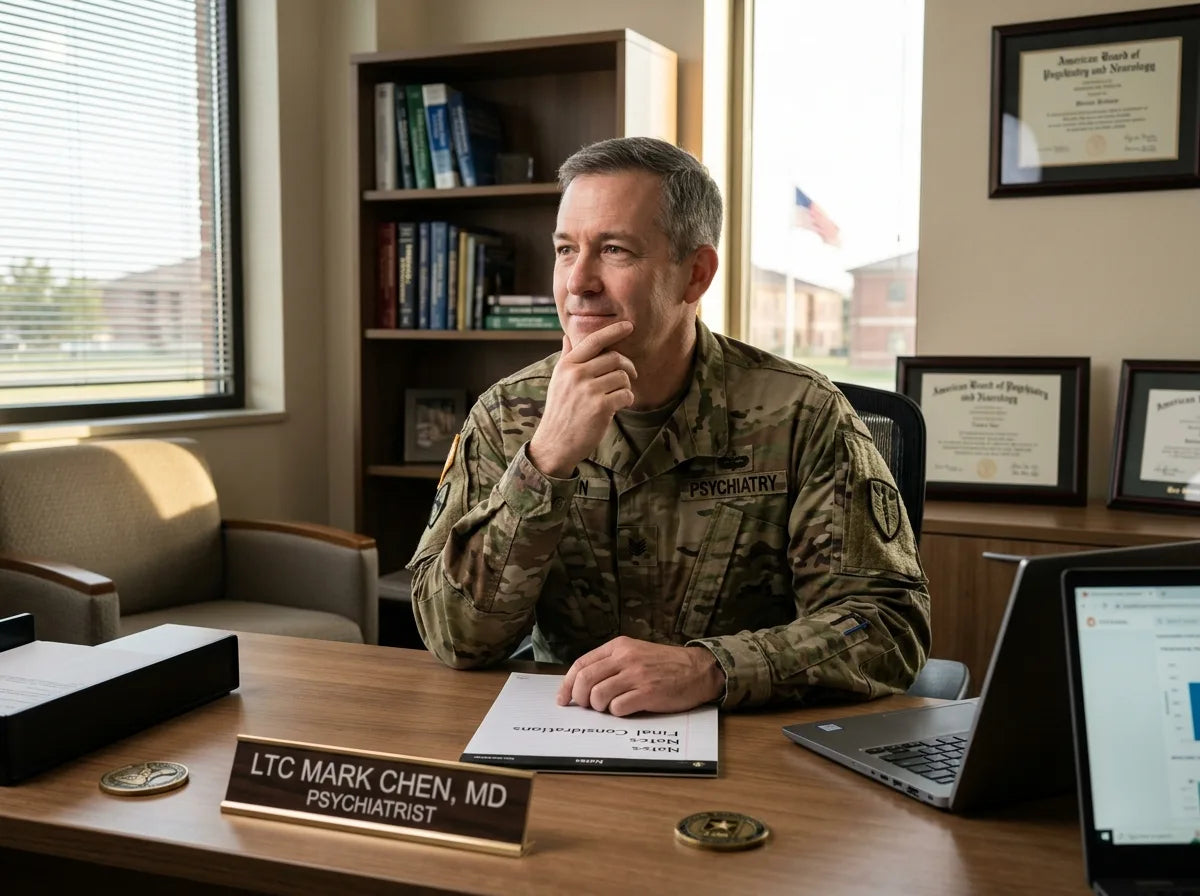
Military psychiatry isn’t tied to one branch. It exists across all of them, with the Army leading in scale and the Navy covering Marine Corps needs. Your choice of branch shapes your deployment experience, duty stations, and career trajectory more than the specialty itself. Whether you’re drawn to combat-forward environments or structured base settings, there’s a path in military psychiatry that fits. Do your research, talk to recruiters in each branch’s medical department, and make an informed choice based on where your skills will have the most impact.