What Does Military Press Work
The military press is one of the most effective upper-body exercises you can do. But what muscles does it actually target, and why should it be in your training routine? Whether you’re a beginner or an experienced lifter, understanding exactly what the military press works helps you train smarter and build real strength.
🎯 What Is the Military Press?
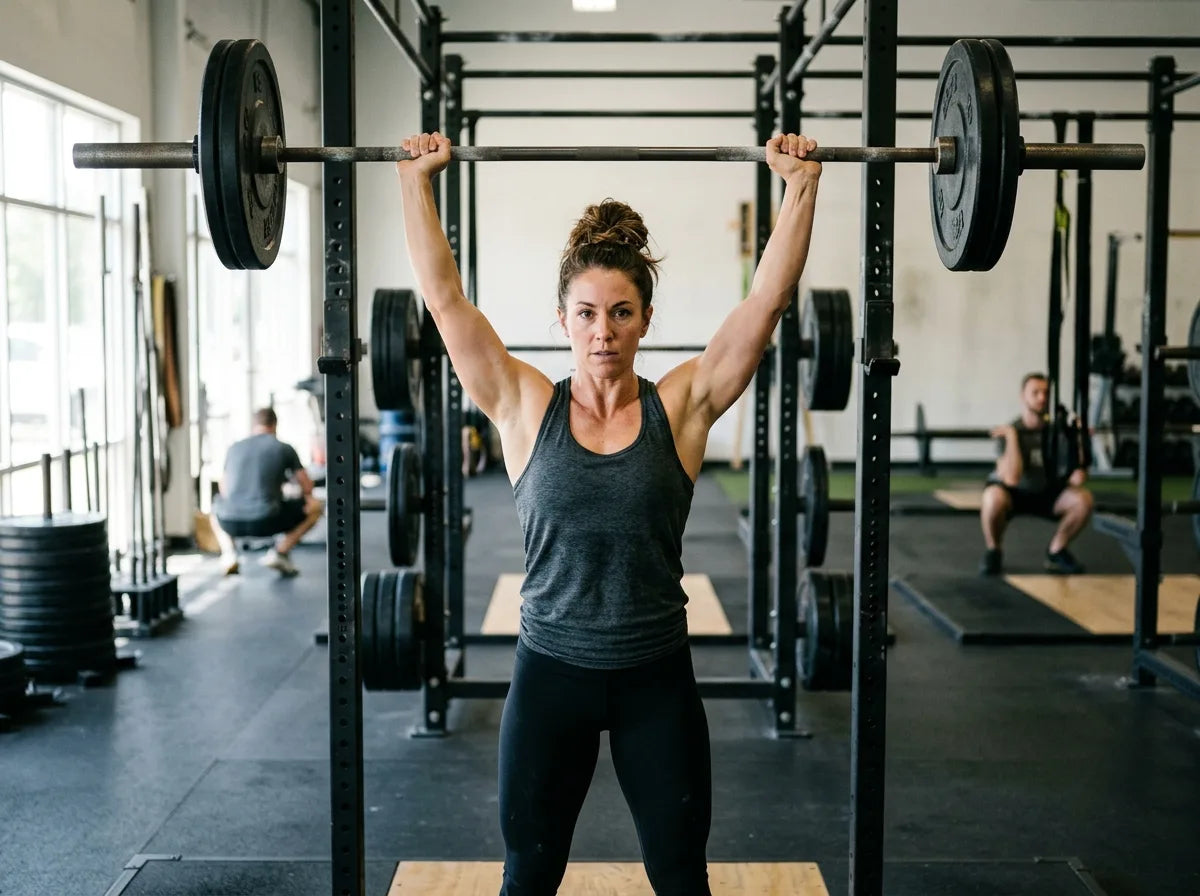
The military press, also called the overhead press or standing barbell press, is a compound strength exercise where you press a barbell (or dumbbells) from shoulder height directly overhead until your arms are fully extended. The name comes from the strict, upright posture historically required in military physical training.
Unlike the bench press, which uses a bench for support, the military press demands full-body tension and stability. You’re pressing against gravity with no external support, which makes it significantly more demanding on your core and stabilizer muscles.
There are two main variations: the standing military press and the seated overhead press. Standing requires more core engagement, while seated allows you to focus more directly on shoulder strength with a heavier load.
💪 Primary Muscles Worked by the Military Press
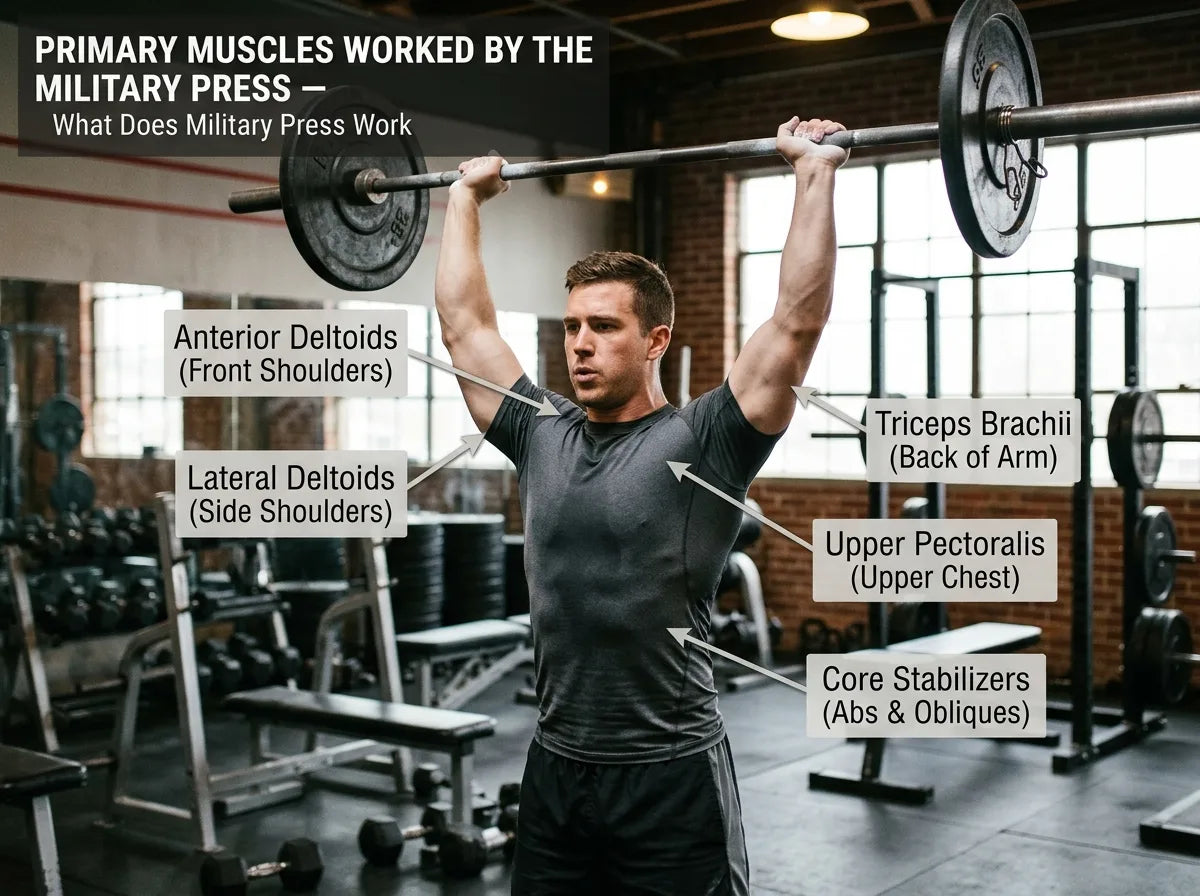
The military press is a compound movement, meaning it recruits multiple muscle groups simultaneously. Understanding which muscles are primary movers helps you program the exercise correctly and identify weaknesses in your overhead pressing strength.
Deltoids (Shoulders)
The deltoid muscle is the primary target of the military press. The deltoid has three heads: anterior (front), medial (side), and posterior (rear). The overhead press places the greatest demand on the anterior deltoid, which drives the initial push upward, while the medial head contributes significantly to the full range of motion.
Building strong, well-developed deltoids improves shoulder width, posture, and athletic performance across nearly every sport. The military press is considered one of the best raw deltoid builders available in strength training.
Triceps Brachii
The triceps are the secondary prime mover in the military press. Once your elbows pass roughly 90 degrees of flexion during the press, the triceps take over to extend the arms and lock out the movement overhead. Weak triceps are one of the most common reasons lifters stall in their overhead press progress.
The long head of the triceps, which crosses the shoulder joint, is particularly active during overhead pressing, making this exercise a dual-purpose tool for both shoulder and arm development.
Upper Chest (Clavicular Head of Pectoralis Major)
While the military press is not a chest exercise, the upper portion of the pectoralis major assists in the initial drive phase of the lift. This is especially true when using a slight forward lean or when pressing dumbbells. The chest contribution is secondary but meaningful, particularly for those looking to develop a complete upper-body pressing pattern.
🔧 Secondary and Stabilizer Muscles Engaged
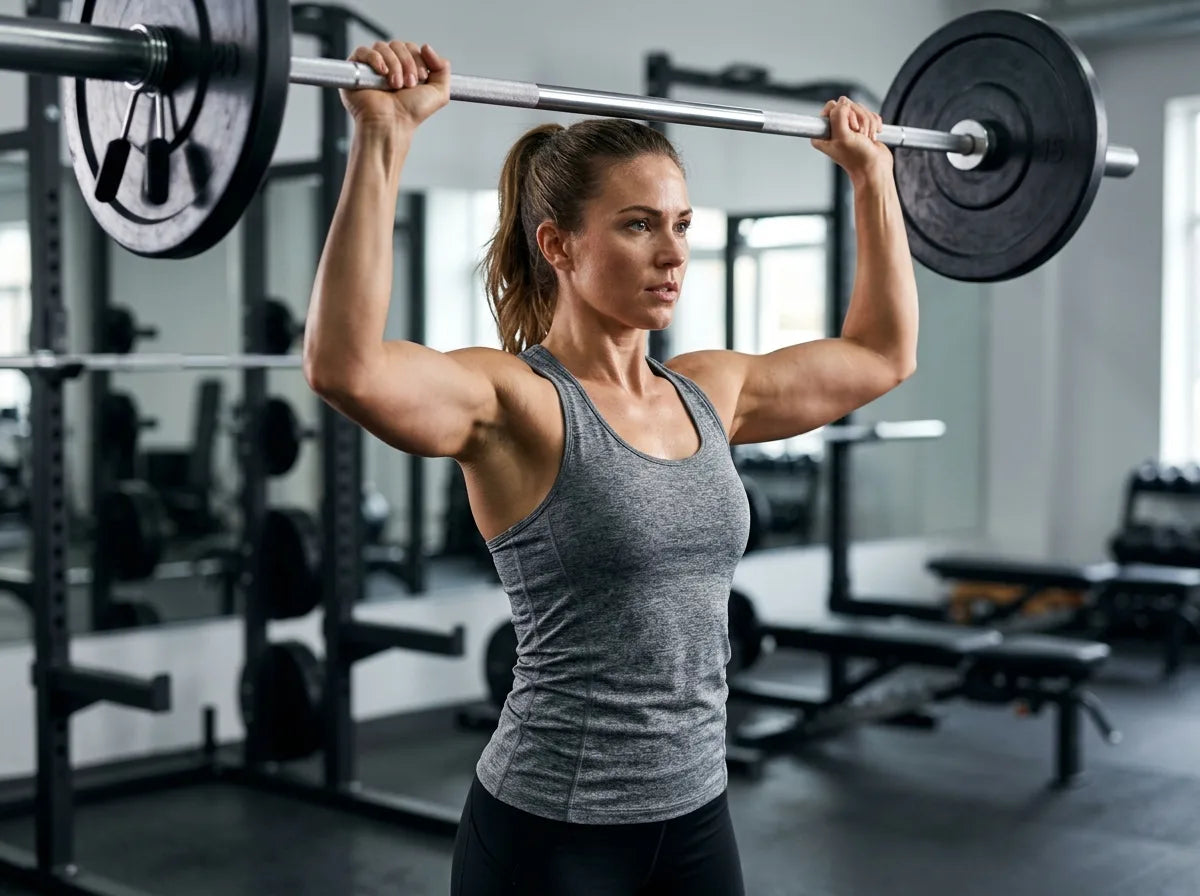
One of the most underappreciated aspects of the military press is how many muscles it activates beyond the obvious shoulder and arm muscles. This is what separates it from isolation exercises and makes it a foundational movement for overall strength.
Trapezius and Serratus Anterior
The trapezius, particularly the upper and middle fibers, works to elevate and rotate the scapula as you press overhead. This scapular upward rotation is critical for safe shoulder mechanics. The serratus anterior, located along the ribcage, protracts the scapula and keeps it pressed against the ribcage throughout the movement.
Neglecting these muscles leads to poor pressing mechanics and increases injury risk. The military press naturally trains both, making it excellent for long-term shoulder health when performed with proper form.
Core Muscles
The standing military press is one of the best core-strengthening exercises that most people don’t think of as a core exercise. Your rectus abdominis, obliques, and spinal erectors all work isometrically to keep your torso rigid and prevent excessive lumbar extension during the press.
A weak core will immediately limit your overhead press performance. This is why many coaches program the standing press as a diagnostic tool, revealing core weaknesses that other exercises might mask.
Glutes and Legs
In the standing variation, your glutes, quadriceps, and calves contract to maintain a stable base. This full-body tension is what allows force to transfer efficiently from the ground through your body and into the barbell. Even though the legs aren’t moving, they’re actively working throughout the set.
- Anterior deltoids – primary shoulder driver
- Medial deltoids – shoulder width and stability
- Triceps brachii – elbow extension and lockout
- Upper trapezius – scapular elevation and rotation
- Serratus anterior – scapular protraction and stability
- Core musculature – spinal stability and force transfer
📊 Military Press vs. Other Overhead Pressing Variations
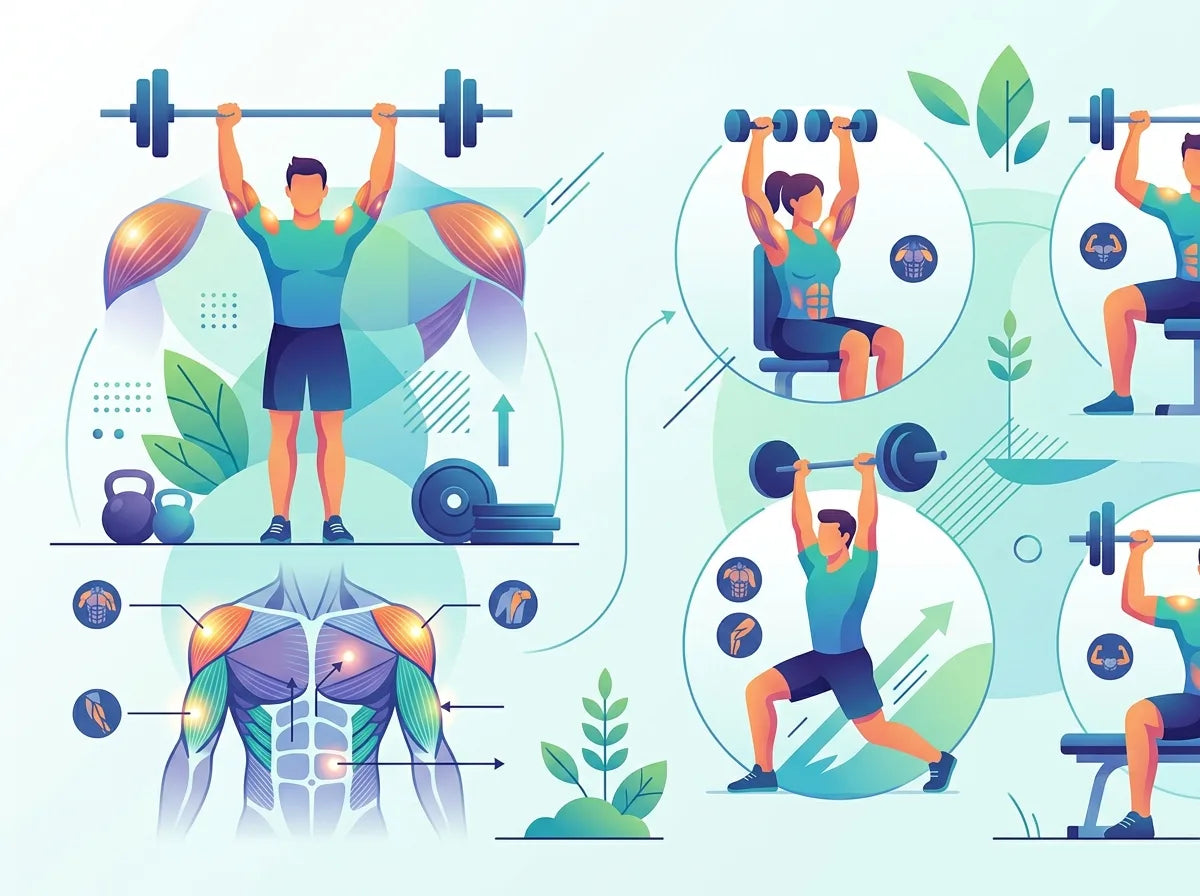
Not all overhead presses are created equal. Understanding how the military press compares to similar exercises helps you choose the right variation for your goals and training level.
| Variation | Primary Muscles | Core Demand | Load Potential |
|---|---|---|---|
| Standing Barbell Military Press | Deltoids, triceps, core | 🔥 Very High | High |
| Seated Barbell Press | Deltoids, triceps | 🟡 Moderate | Very High |
| Dumbbell Overhead Press | Deltoids, triceps, stabilizers | 🟡 Moderate | Moderate |
| Arnold Press | All three deltoid heads | 🟢 Low-Moderate | Low-Moderate |
| Push Press | Deltoids, triceps, legs | 🔥 Very High | Very High |
The strict standing military press intentionally limits leg drive, making it a purer test of upper-body pressing strength. This is also why it’s typically performed with less weight than a push press or seated variation. If you’re curious about the broader cultural and historical context of military terminology, you might find it interesting to read about what G.I. means in the military, as military-inspired language has made its way into fitness culture in many ways.
✅ Benefits of Adding the Military Press to Your Training
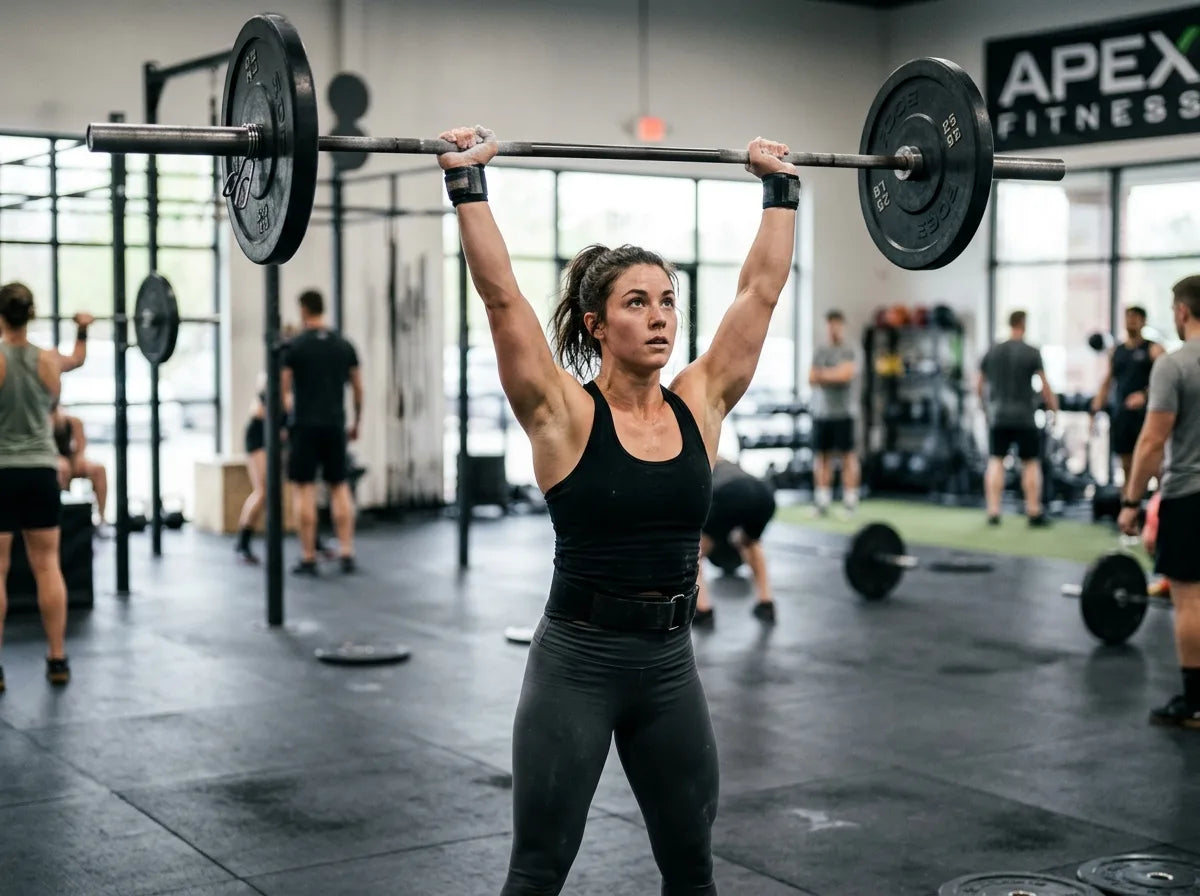
Beyond muscle development, the military press offers a range of functional and performance benefits that make it worth prioritizing in almost any training program.
Builds Functional Overhead Strength
Overhead pressing strength is directly applicable to daily life and athletic performance. Lifting objects overhead, throwing, swimming, and climbing all rely on the same muscle patterns developed by the military press. Functional strength built through the military press transfers to real-world movement in a way that machine-based exercises often don’t.
Improves Shoulder Stability and Health
When performed with proper technique, the military press strengthens the rotator cuff indirectly, improves scapular stability, and develops the surrounding musculature that protects the shoulder joint. Many physical therapists and strength coaches include overhead pressing variations in rehabilitation programs for this reason.
Increases Upper Body Muscle Mass
Because the military press is a compound movement recruiting the deltoids, triceps, upper chest, and traps simultaneously, it produces a significant anabolic stimulus. Progressive overload on the overhead press leads to measurable hypertrophy in the shoulders and arms, particularly when combined with adequate nutrition and recovery.
Reveals and Corrects Imbalances
The standing military press exposes asymmetries and weaknesses that other exercises hide. If one side presses unevenly, if the lower back excessively arches, or if the bar path drifts forward, these are clear signals of muscle imbalances or mobility restrictions that need to be addressed.
⚠️ Common Mistakes That Reduce Effectiveness
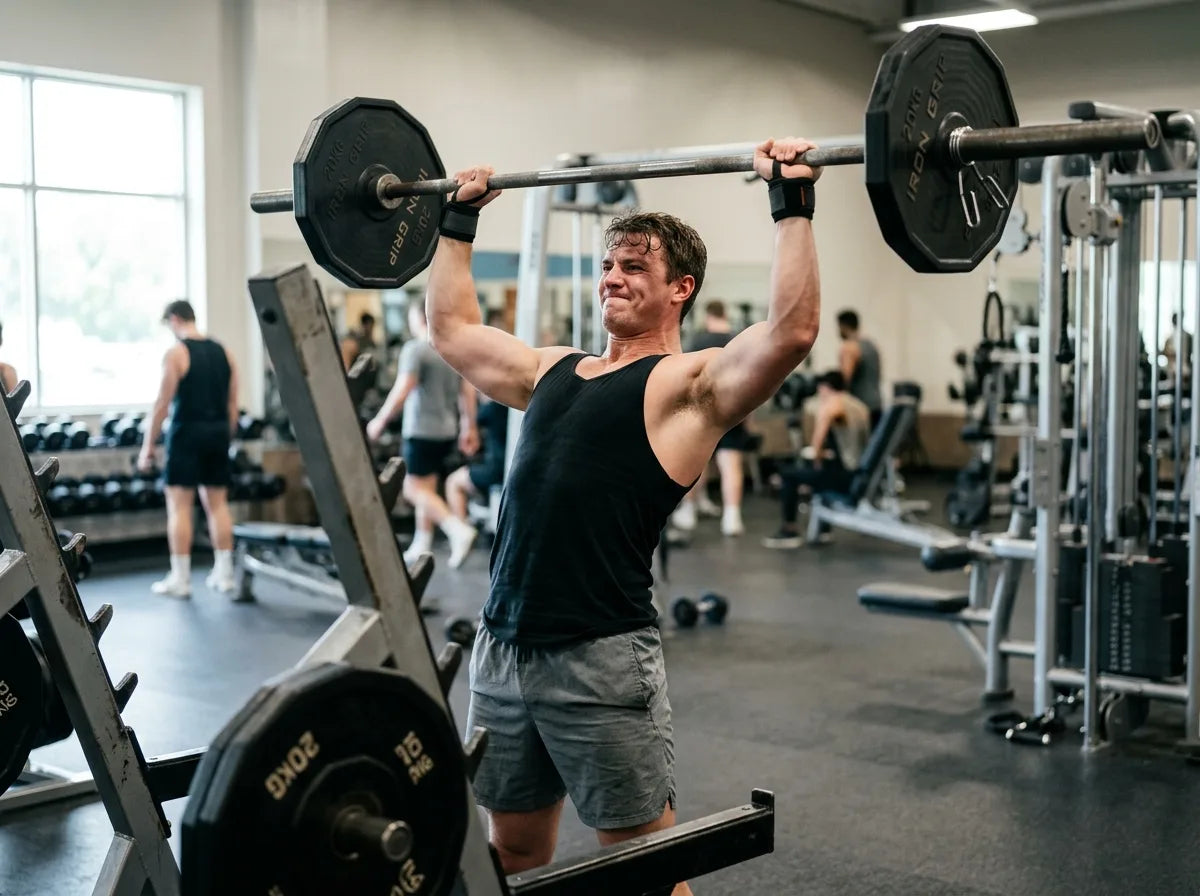
Performing the military press incorrectly not only reduces its effectiveness but also increases injury risk, particularly to the lower back and shoulder joint.
- Excessive lumbar extension – arching the lower back too much shifts stress away from the shoulders and onto the spine
- Flared elbows at the start – elbows should be slightly in front of the bar, not directly to the sides
- Partial range of motion – not pressing to full lockout reduces triceps and deltoid activation
- Forward bar path – the bar should travel in a straight vertical line, not arc forward and back
- Neglecting the descent – lowering the bar with control builds more muscle than dropping it quickly
Grip width matters too. A grip slightly wider than shoulder-width is standard for most lifters. Too narrow puts excessive stress on the wrists, while too wide reduces the range of motion and mechanical advantage at the shoulder.
🏋️ How to Program the Military Press for Best Results
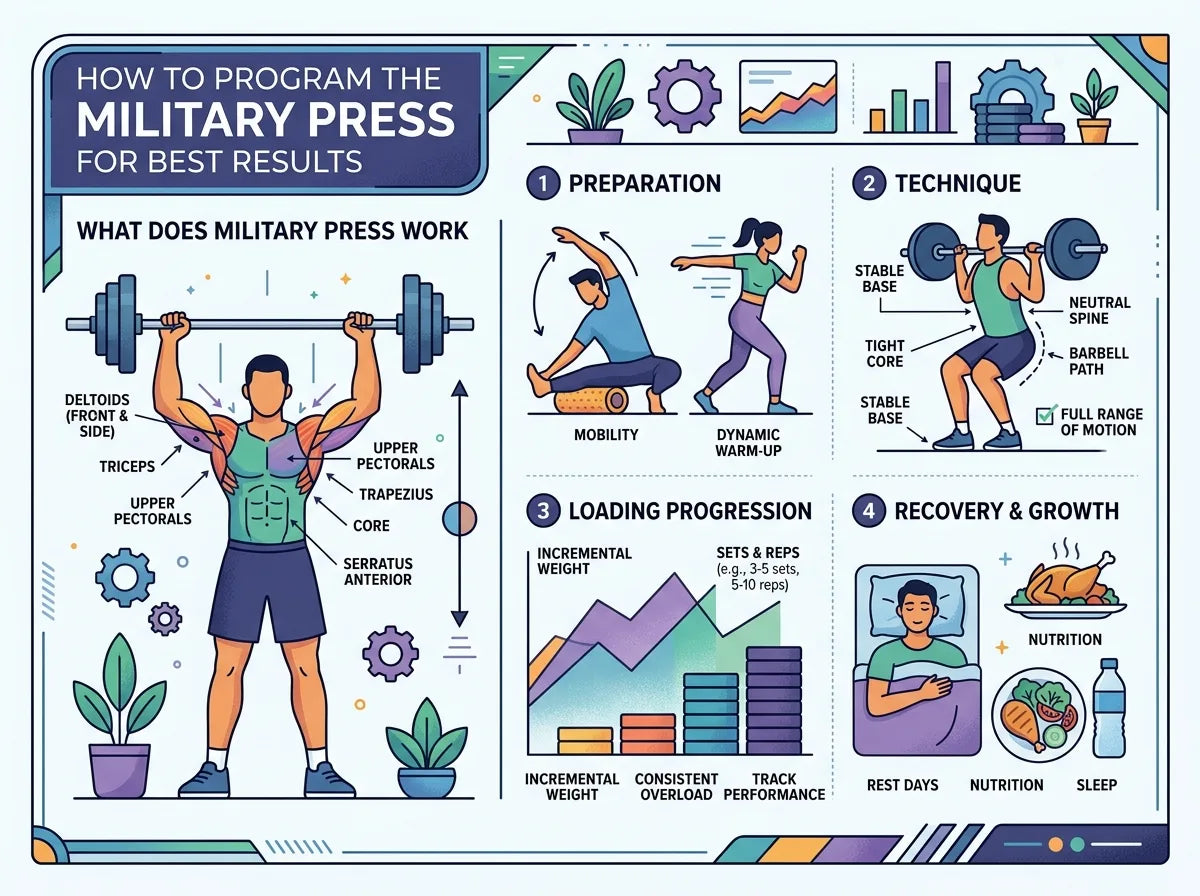
The military press responds well to both strength-focused and hypertrophy-focused programming. For raw strength development, sets of 3-5 repetitions with heavy loads and full recovery between sets are effective. For muscle growth, sets of 6-12 repetitions with moderate loads and shorter rest periods produce more volume and metabolic stress.
Most intermediate lifters benefit from pressing overhead 2 times per week, allowing enough frequency for skill development and progressive overload without accumulating excessive shoulder fatigue. Pairing the military press with horizontal pulling movements like rows and face pulls helps maintain balanced shoulder development and reduces injury risk.
Understanding what the military press works is just one part of a larger picture of physical readiness and fitness. If you’re interested in how physical training fits into broader institutional goals, learning about what the military does provides useful context for why exercises like the overhead press have been central to military fitness standards for generations.
Final Thoughts
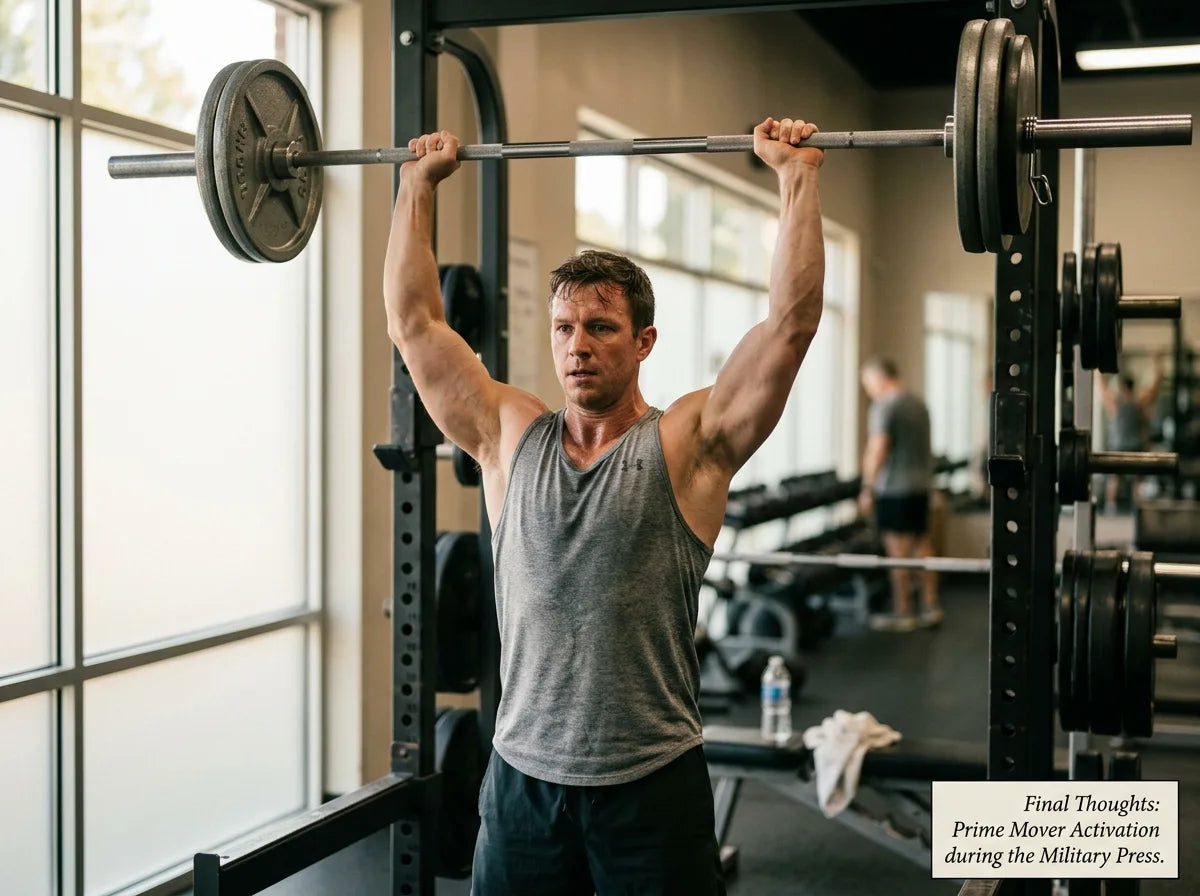
The military press works your deltoids, triceps, upper chest, trapezius, serratus anterior, and core, all in a single compound movement. It builds functional overhead strength, improves shoulder stability, and reveals weaknesses that other exercises miss. If you want stronger, more developed shoulders and a more capable upper body, the military press deserves a permanent place in your training program. Focus on form, progress consistently, and the results will follow.