Who Was the Last President to Serve in the Military
Military service and the presidency have gone hand in hand throughout much of American history. But as the generations of World War II and Vietnam veterans aged out of political life, that tradition quietly faded. So who was the last U.S. president to actually serve in the military, and what does that shift mean?
🎖️ The Last President with Military Service: George W. Bush
George W. Bush is the most recent U.S. president to have served in the military. He served as a pilot in the Texas Air National Guard from 1968 to 1973, flying F-102 Delta Dagger fighter jets. His service record became a subject of significant public debate during his presidential campaigns, particularly regarding gaps in his attendance record.
Regardless of the controversy, his time in uniform makes him the last commander-in-chief with documented military service before taking office. Every president elected after Bush, including Barack Obama, Donald Trump, and Joe Biden, had no military background whatsoever.
What Branch Did George W. Bush Serve In?
Bush served in the Air National Guard, a component of the U.S. Air Force reserve structure. He was commissioned as a second lieutenant and trained at Moody Air Force Base in Georgia before being assigned to Ellington Air Force Base in Texas. His rank at discharge was first lieutenant.
Why Was His Service Controversial?
Critics questioned whether Bush received preferential treatment to avoid Vietnam-era deployment. Records showed periods where his attendance at required Guard duties was inconsistent. Supporters argued his service was legitimate and honorable. The debate never fully resolved, but his name remains in the official record as a veteran president.
📜 A Long History: Presidents Who Served Before Bush
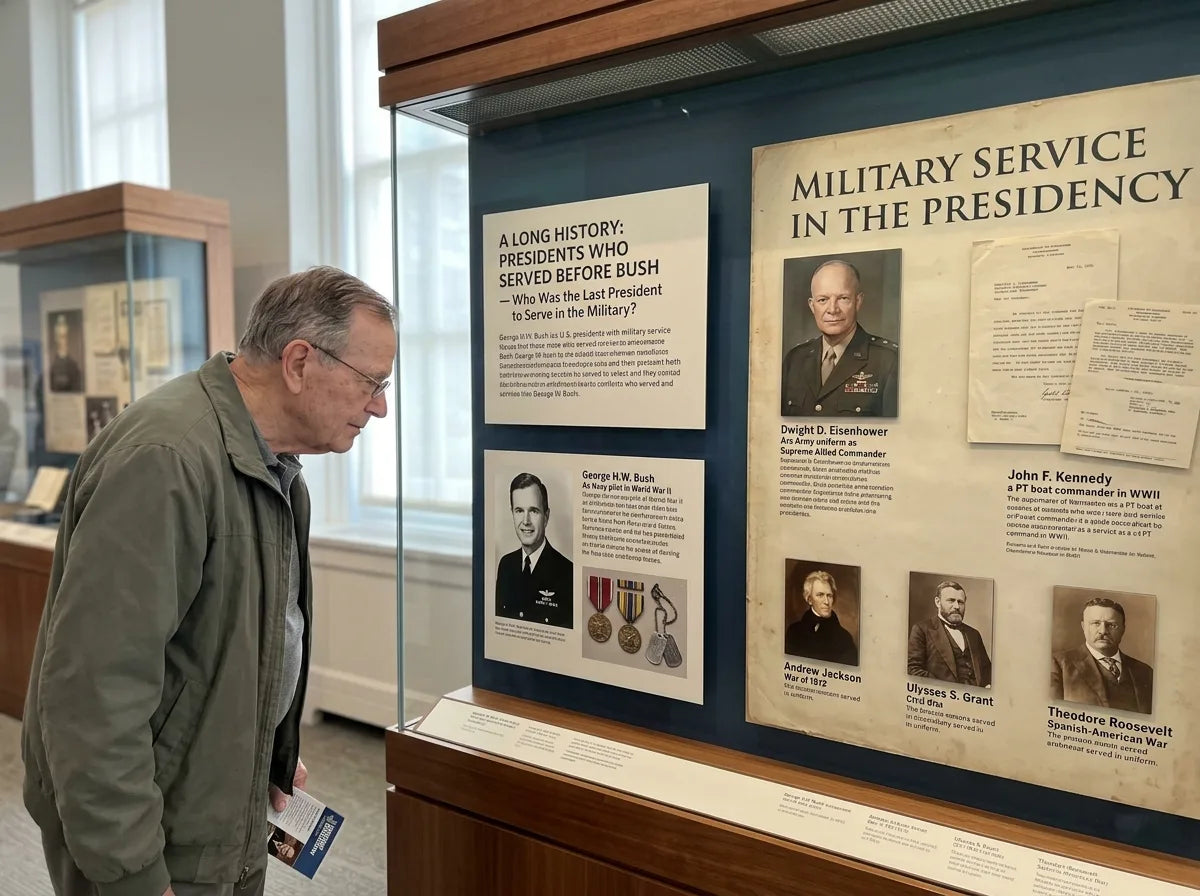
Before Bush, military service was practically a prerequisite for the presidency. From George Washington to the Cold War era, nearly every president had some form of military background. The post-World War II period in particular produced a string of veteran presidents who shaped the modern office.
| President | Branch | Conflict | Highest Rank |
|---|---|---|---|
| George H.W. Bush | U.S. Navy | World War II | Lieutenant (JG) |
| Bill Clinton | None | N/A | N/A |
| George W. Bush | Air National Guard | Vietnam Era | First Lieutenant |
| Barack Obama | None | N/A | N/A |
| Donald Trump | None | N/A | N/A |
| Joe Biden | None | N/A | N/A |
Notice that Bill Clinton broke the streak before Bush. Clinton was the first president since Franklin Roosevelt to have no military service, which itself sparked major controversy during the 1992 election. Bush briefly restored the veteran tradition before it ended for good with the next generation of leaders.
🪖 Presidents with the Most Impressive Military Records
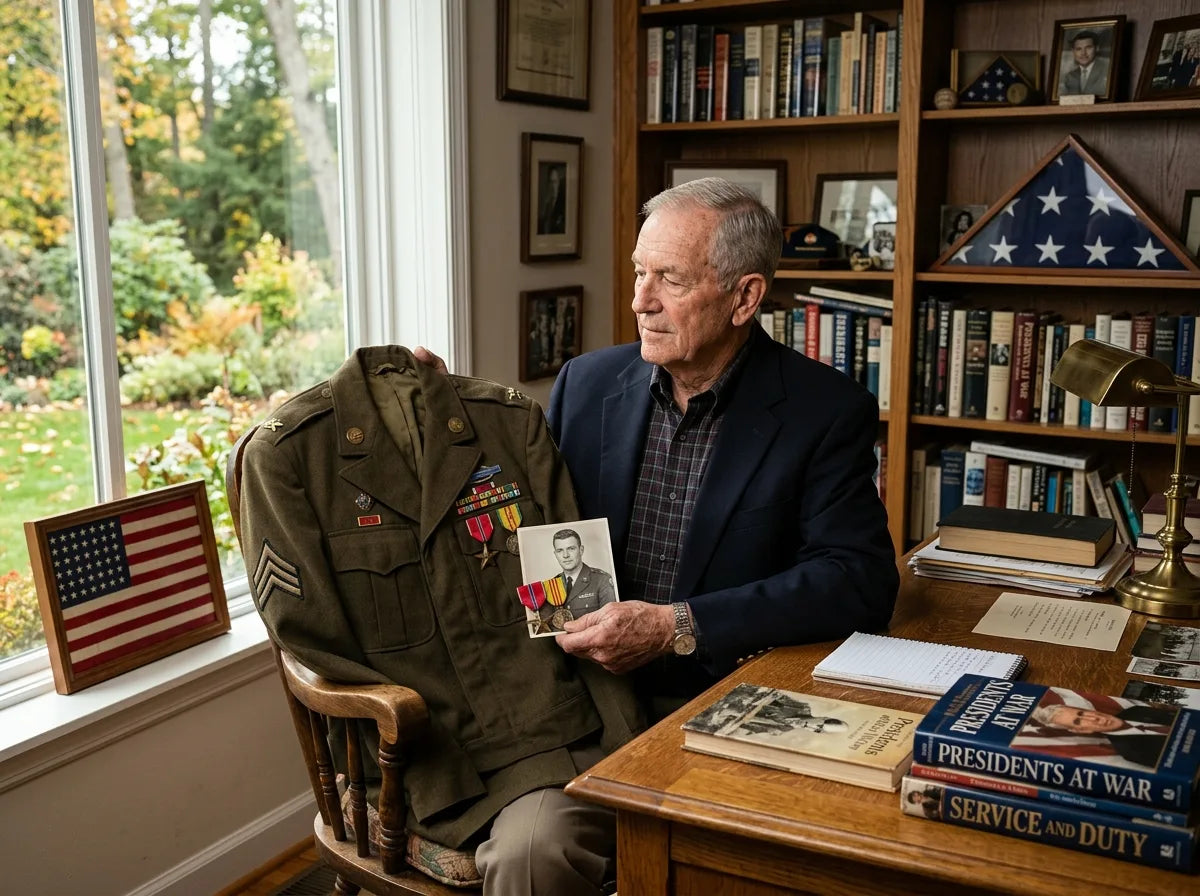
To understand how significant the shift away from veteran presidents really is, it helps to look back at the commanders-in-chief who came before with genuinely distinguished service records. These weren’t just men who served, they were men shaped entirely by war.
Dwight D. Eisenhower – Supreme Allied Commander
Dwight D. Eisenhower remains the gold standard for military presidents. As Supreme Commander of Allied Expeditionary Forces in Europe during World War II, he planned and executed the D-Day invasion at Normandy. He achieved the rank of General of the Army, a five-star rank held by only a handful of Americans in history. His presidency from 1953 to 1961 was deeply influenced by his military worldview.
John F. Kennedy – PT-109 Commander
Kennedy served as a U.S. Navy lieutenant in the Pacific during World War II. His torpedo boat, PT-109, was rammed and sunk by a Japanese destroyer in 1943. Kennedy led his surviving crew members to safety, swimming for hours and towing an injured sailor with a life jacket strap held in his teeth. He was awarded the Navy and Marine Corps Medal for his actions.
Jimmy Carter – Nuclear Submarine Officer
Carter served as a naval officer under Admiral Hyman Rickover, the father of the nuclear Navy. He was being groomed to command a nuclear submarine when his father died and he left the service to manage the family farm. His technical understanding of nuclear technology was arguably deeper than any other president in history.
Much like how military equipment and traditions evolved over time, such as exploring what year the military stopped using swords, the role of personal military experience in presidential leadership has also shifted dramatically from one era to the next.
📉 Why Did the Veteran President Tradition End?
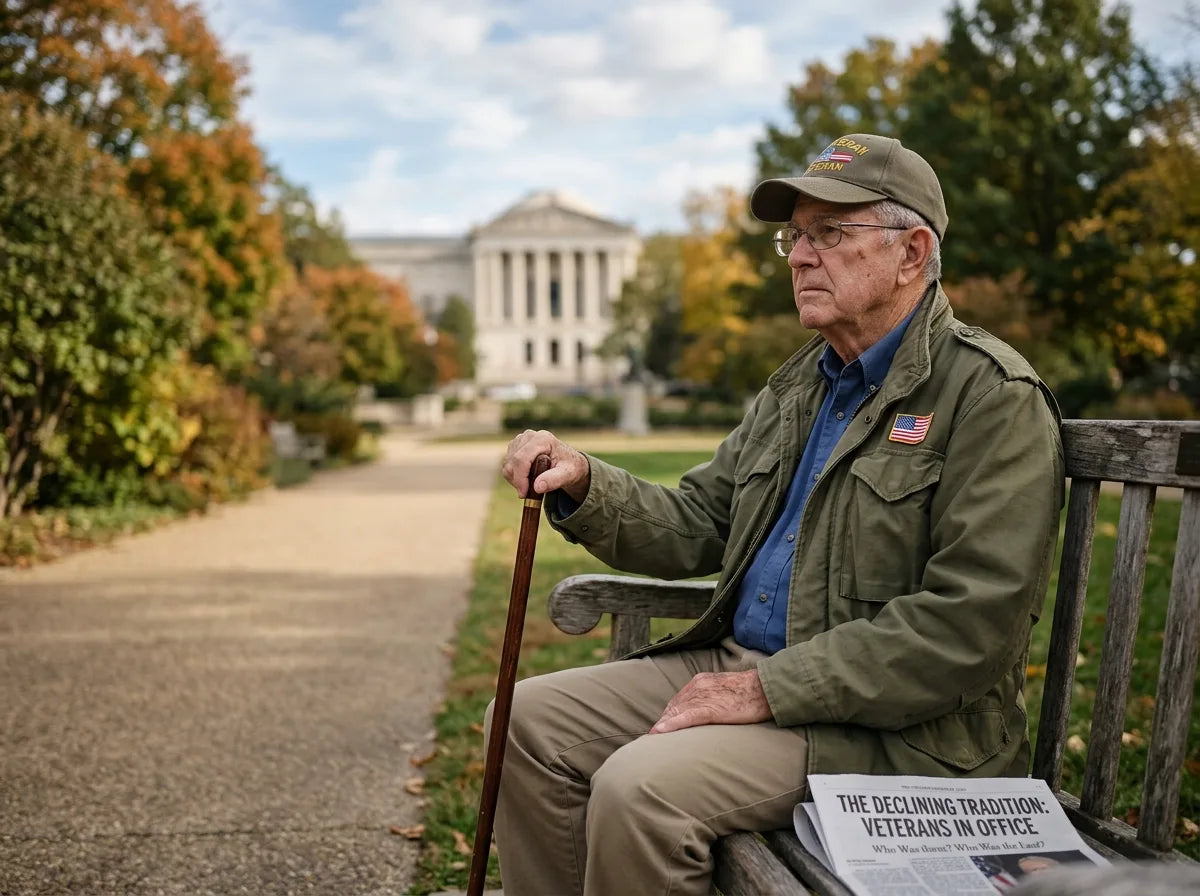
The answer is largely demographic and generational. The massive wave of World War II veterans who entered politics after 1945 dominated American leadership for decades. As that generation aged and passed, the pool of politically active veterans shrank considerably.
- The end of the military draft in 1973 meant fewer Americans served at all
- Post-Vietnam political culture shifted away from viewing military service as essential for leadership
- The rise of career politicians from law and business backgrounds changed voter expectations
- Fewer members of Congress have military backgrounds, reducing the pipeline to the presidency
- Modern conflicts are smaller in scale, producing fewer high-profile veteran political figures
- Public attitudes toward military service became more polarized along political lines
This trend isn’t unique to the presidency. The percentage of members of Congress who are veterans has dropped from over 70% in the 1970s to under 20% in recent decades. The cultural connection between military service and civic leadership has genuinely weakened across the board.
⚠️ Does Military Service Matter for a President?
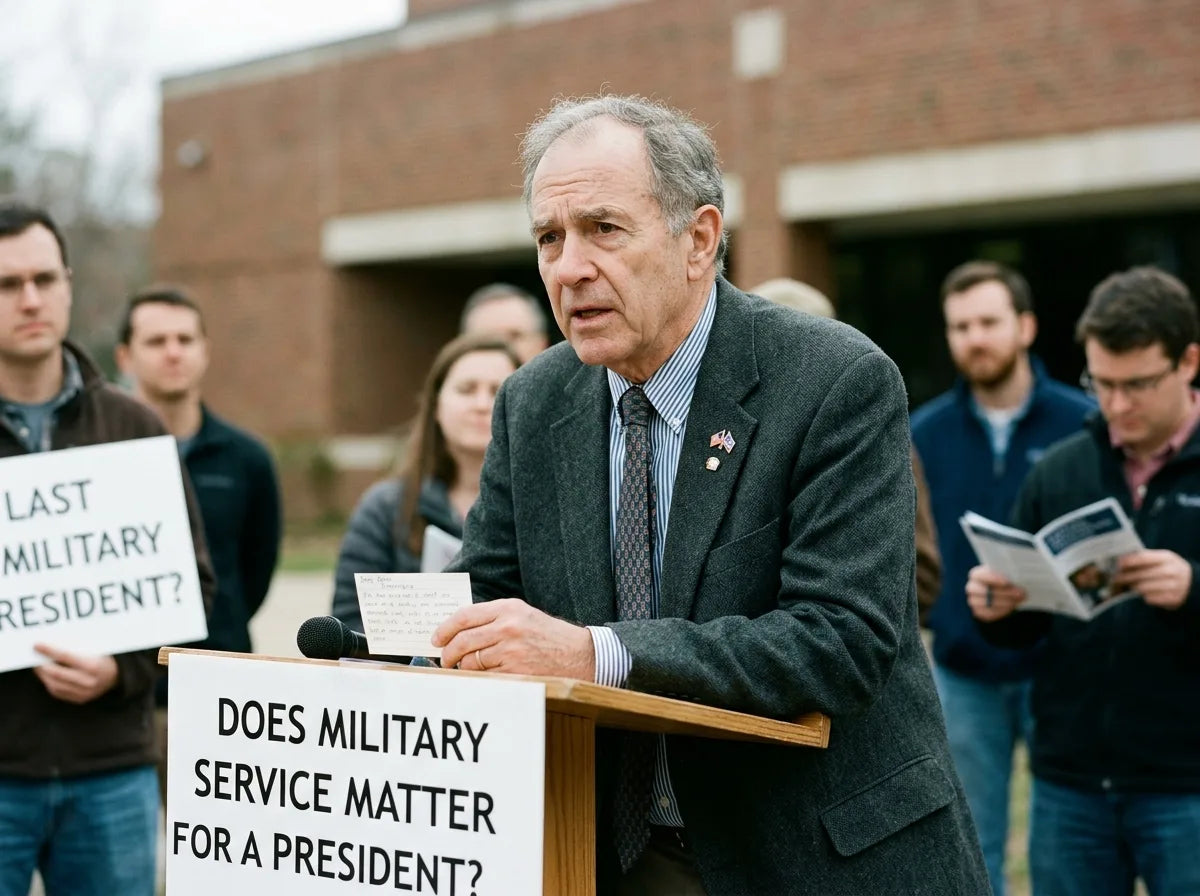
This is a genuinely debated question among historians and political scientists. There are strong arguments on both sides, and the historical record doesn’t give a clean answer either way.
Arguments That It Does Matter
Presidents with combat experience arguably have a more grounded understanding of what it means to send troops into harm’s way. Eisenhower’s famous warning about the military-industrial complex came from someone who understood that world from the inside. Kennedy’s caution during the Cuban Missile Crisis was reportedly shaped by his firsthand knowledge of how quickly battlefield situations can spiral beyond control.
Arguments That It Doesn’t Define Effectiveness
Some of America’s most consequential presidents had minimal or no military service. Franklin D. Roosevelt served as Assistant Secretary of the Navy but never wore a uniform in combat, yet he led the country through most of World War II with considerable strategic skill. Abraham Lincoln served briefly in the Illinois militia during the Black Hawk War but saw no combat, and he is consistently ranked among the greatest presidents in history.
The correlation between military service and presidential effectiveness is weak at best. What seems to matter more is judgment, temperament, and the ability to listen to expert advice, qualities that military service can develop but certainly doesn’t guarantee.
🎯 What the Future May Hold for Veteran Presidents
There is no constitutional requirement for the president to have served in the military. The only formal requirements are being a natural-born citizen, at least 35 years old, and having resided in the United States for at least 14 years. Military service has never been on that list.
That said, a new generation of Iraq and Afghanistan veterans has been entering politics at the local, state, and federal level. Figures like Pete Buttigieg, a Navy Reserve intelligence officer who served in Afghanistan, have shown that younger veterans can build national political profiles. Whether one of them eventually reaches the presidency remains to be seen.
If you’re curious about the structure and commitments of military life that shape these individuals, it’s worth understanding how long you have to be in the military to complete a standard service commitment, since that foundation of experience is what veteran politicians often draw on when discussing national security and foreign policy.
The tradition of veteran presidents isn’t dead, it’s simply in a long pause. Whether American voters will again prioritize that background in a future candidate depends heavily on the political and security climate of the coming decades.
In Summary
George W. Bush holds the distinction of being the last U.S. president with military service, having flown jets in the Texas Air National Guard during the Vietnam era. Before him, military backgrounds were nearly universal among presidents, shaped by the massive shared experience of World War II. The tradition faded with that generation, though the door remains open as a new wave of veteran politicians finds its footing in American public life. History has a way of cycling back.