
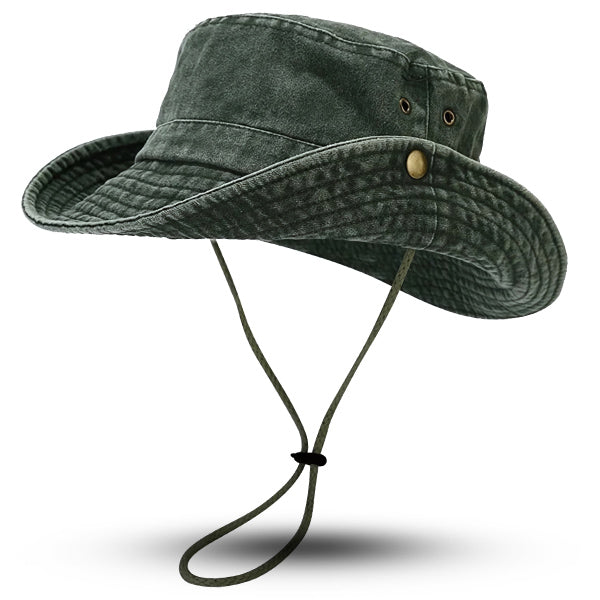
Boonie Hat vs Bucket Hat: Differences and How to Choose the Right One
The short answer to the boonie hat vs bucket hat question: a boonie hat is a field hat built for sun, sweat and brush, with a wider brim, a chin strap, foliage loops and usually vent holes or mesh. A bucket hat is its simpler cousin, with a shorter downward-sloping brim and a clean crown, made for everyday wear, light outdoor use and streetwear. If you spend long hours under open sky, pick a boonie. If you want an easy, packable hat that looks good in town, pick a bucket hat. The rest of this guide explains the details that actually make the difference.
Where each hat comes from
The military boonie hat
The boonie hat became a standard piece of field kit for American troops during the Vietnam War, where soldiers needed protection from relentless sun and tropical rain while moving through jungle terrain. The name comes from “the boonies,” slang for remote backcountry, itself drawn from “boondocks.” Its design borrowed from earlier wide-brimmed tropical and bush hats worn by several armies, including the Australian bush hat, which is why many people still search for “army bush hats” when they mean a boonie.
Every feature on a classic boonie has a field purpose: a brim wide enough to shade the neck and ears, a band of fabric loops around the crown to hold vegetation for camouflage, eyelets to vent heat, and a cord to keep the hat on in wind or when it is pushed back off the head. Camouflage versions followed the uniform patterns of their era, from woodland to the desert camouflage boonie hat still popular today.
The bucket hat
The bucket hat traces back to the early twentieth century, when farmers and fishermen in Ireland wore soft wool or tweed hats that shed rain and could be folded into a pocket. Military forces later adopted similar cotton versions for fatigue and sun use, which is where the “army fatigue bucket hat” and “army green bucket hat” styles come from. From there the bucket hat moved into music, skate and street culture, and today it is as much a fashion item as a functional one.
Boonie hat vs bucket hat: the key differences
Both hats share the same basic shape, a crown with a brim that runs all the way around. The differences are in proportions and details.
| Feature | Boonie hat | Bucket hat |
|---|---|---|
| Brim | Wider, often stitched flat or semi-stiff, can be snapped up on the sides | Shorter, soft, slopes downward |
| Chin strap | Standard, usually adjustable with a toggle | Rare, some modern versions add one |
| Foliage loops | Common on military-style models | Almost never |
| Ventilation | Metal eyelets or mesh panels on the crown | Sometimes eyelets, often none |
| Look | Rugged, field-ready | Clean, casual, urban-friendly |
| Best for | Hiking, fishing, bushcraft, hunting, hot climates | City wear, festivals, light outdoor use, travel |
Brim width and shape
The brim is the biggest practical difference. A boonie brim extends further out and stays more horizontal, which throws shade over the face, ears and back of the neck. Many have rows of stitching that stiffen the brim so it keeps its shape in wind. A bucket hat brim is shorter and angles down, which protects the eyes and forehead but leaves more of the neck exposed when the sun is high. Some boonies also have side snaps so you can fold one or both sides up, a detail borrowed from bush hats that makes it easier to shoulder a rifle, a fishing rod or a backpack strap.
Chin strap
A chin strap sounds minor until the first gust of wind on a ridge or a boat. On a boonie it usually runs through the crown with a sliding toggle, so you can cinch it under the chin, behind the head, or let the hat hang on your back when you step into shade. Most bucket hats skip the strap, which is fine on a city street but frustrating near water or on exposed trails. If you like the bucket hat look but need it to stay put, look for a model that includes one, such as a wide brim bucket hat with chin strap.
Foliage loops
The band of fabric loops around a boonie crown was designed to hold leaves, grass or small branches so the wearer’s silhouette blends into the background. Hunters and wildlife photographers still use them for that purpose. Outside the field they are handy for clipping sunglasses. Bucket hats do not have them, which keeps the outline smooth and minimal.
Ventilation and mesh
Heat builds up fast under a full fabric crown. Boonies typically handle this with metal eyelets near the top of the crown or with mesh panels around the sides, which let warm air escape while the brim still blocks the sun. Mesh boonies are the better choice for humid summers or long days on the water. Bucket hats tend to have a solid crown, sometimes with a pair of eyelets, which makes them a bit warmer but also better at keeping out light rain and wind.
Materials
Both styles are most often made of cotton or cotton blends, ripstop polyester or nylon. Washed cotton is soft, breathable and has a broken-in look from the start, which suits both a boonie and a casual bucket hat. Ripstop synthetics dry faster and resist snags, so they make sense for bushcraft and wet environments. Wool and tweed bucket hats exist for cold, damp weather, while canvas versions add structure and durability. Whatever the fabric, check that the sweatband is comfortable, because that is the part that touches your forehead all day.
Sun protection
For pure sun coverage, the boonie wins because of its wider, flatter brim and the way it shades the neck and ears. Health organizations generally recommend a wide-brimmed hat over a cap or a short-brimmed style for exactly this reason. Tightly woven fabrics block more light than loose weaves, and darker or more saturated colors tend to block more than pale ones, though they also absorb more heat. If you need maximum coverage, a boonie in a dense weave with mesh only above the brim line is a good balance between shade and airflow.
Which one should you choose?
For hiking
Go with a boonie. Long exposure on open trails is where the wider brim, chin strap and ventilation all earn their place. A washed cotton model like this olive green boonie sun hat with a chin strap covers most day hikes, and it crushes down into a pack when you reach the tree line.
For fishing
Again, the boonie usually makes more sense. Light reflects off the water, so you get sun from above and below, and the wider brim helps with both glare and neck coverage. Wind on open water makes the chin strap almost essential. Mesh models are worth considering if you fish in hot, humid conditions.
For bushcraft and camping
Bushcraft favors durable, quiet, earth-toned gear. A boonie in olive, khaki or a natural camouflage pattern blends in, takes abuse from branches and smoke, and the foliage loops give you somewhere to hang small items. Our selection of bushcraft hats groups the models built for this kind of use. In the desert or on dry, sandy terrain, a desert camouflage boonie hat matches the landscape better than green tones.
For hunting and wildlife watching
Choose a camouflage boonie whose pattern matches the environment you are in. The foliage loops let you break up your outline further with local vegetation. A short bucket hat offers less concealment because it leaves more of the face and its shape stands out.
For streetwear and everyday use
This is where the bucket hat shines. Its shorter brim and cleaner lines pair well with cargo pants, oversized tees, hoodies and military-inspired jackets without looking like you are heading into the field. Army green, black and classic camouflage are the easiest colors to wear. Browse our bucket hats for plain and washed styles, or go straight to the camo bucket hats if you want a pattern that reads as military without the full field look.
How to get the right fit
A field hat should sit snugly without pressing on the temples. Measure the circumference of your head just above the eyebrows and ears, then compare it with the size guide on the product page. If you fall between two sizes, the larger one is usually better for a boonie, since the chin strap will keep it secure, while a bucket hat that is too loose tends to slide down over the eyes. Washed cotton can soften with wear, so a hat that feels slightly firm at first often relaxes into a comfortable fit.
Caring for your hat
Most cotton boonies and bucket hats can be hand-washed in cool water with mild detergent. Avoid wringing them hard, reshape the brim while damp and let the hat air-dry away from direct heat, which can shrink cotton and warp a stiffened brim. Brush off dried mud before washing. Always follow the care label first, as materials and finishes vary from one model to another. For more styles beyond these two, take a look at the full range of camo hats.
FAQ
Is a boonie hat the same as a bucket hat?
No. They share the same general shape, but a boonie hat has a wider, flatter brim, a chin strap, ventilation and often foliage loops, because it was designed as military field gear. A bucket hat has a shorter, downward-sloping brim and a plainer design aimed at everyday wear.
Which hat gives better sun protection?
The boonie hat, in most cases. Its wider brim shades the face, ears and neck more completely than the shorter brim of a typical bucket hat. Fabric weave and color also play a role, so a tightly woven boonie offers the most coverage.
Why do boonie hats have loops around the crown?
The loops were designed to hold leaves, grass or small branches for camouflage, breaking up the outline of the wearer’s head. Today they are also used to clip sunglasses or small accessories.
Can you wear a boonie hat as streetwear?
Yes, especially in plain olive, black or tan, which look less tactical than bold camouflage. That said, a bucket hat is usually the easier choice for city outfits because of its shorter brim and cleaner silhouette.
What is an army bush hat?
It is a wide-brimmed field hat worn by various armed forces in hot climates. The term is often used interchangeably with boonie hat, although some bush hats have a stiffer brim or a side that snaps up against the crown.